

The House of Lost Women (1983) – AKA La Casa de Las Mujeres Perdidas
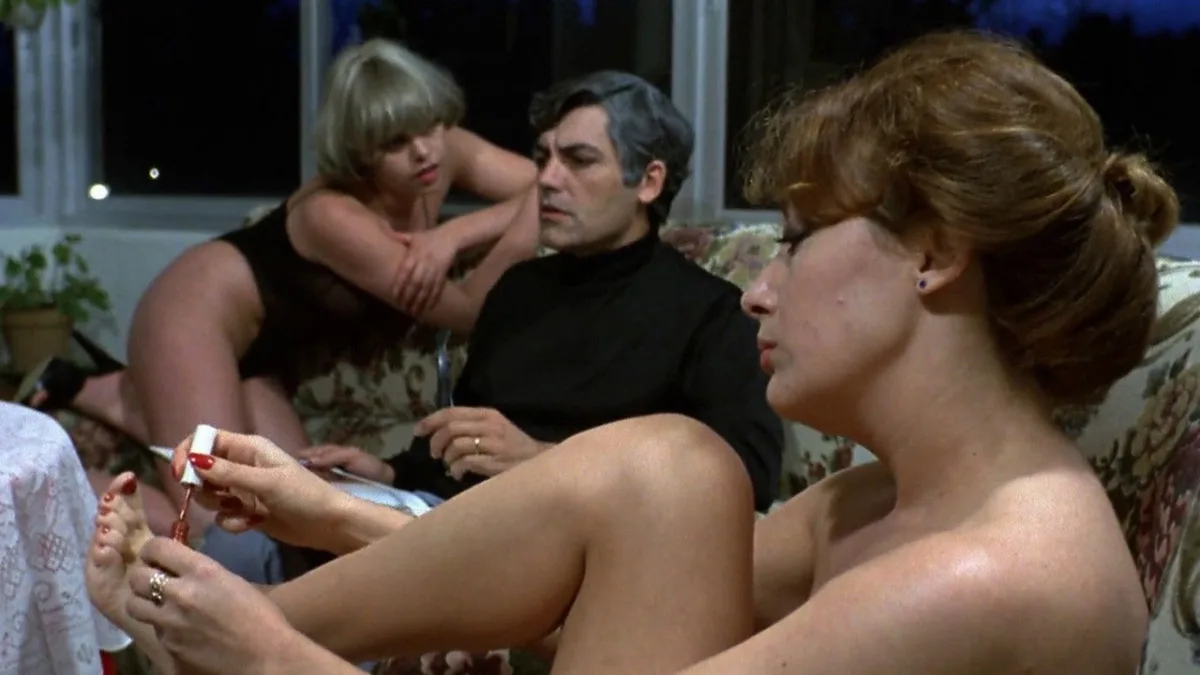
A Sun-Baked Psychosexual Melodrama where an Isolated Family Masturbates, Fights and Slowly Falls Apart—until a Handsome Stranger Arrives and Gives Every Buried Desire Somewhere Dangerous to Go.
Desdemona lives in a crumbling island household with Mario, her vain, impotent father; Dulcinea, his bitter and sexually frustrated mistress; and Paulova, Desdemona’s deeply troubled sister. With nowhere to go and nothing meaningful to do, their days have become a warped routine of naked wandering, compulsive masturbation, petty cruelty and incestuous temptation. Desdemona openly teases Mario, while Dulcinea humiliates him for failing as both lover and patriarch, then turns her anger against the two younger women. Mario claims to be a political exile and former theatrical great, but his grand stories sound increasingly like the fantasies of a broken actor hiding from a sordid past. Their overheated little kingdom is disrupted when Tony, a handsome hunter carrying a rifle, lands on the...
island. Desdemona sees her first real chance to experience a man beyond the family prison; Dulcinea sees the virile lover Mario can no longer be; and Mario sees a rival who exposes every one of his weaknesses. Seduction, jealousy and violence soon overlap as the stranger moves between the women and Mario’s authority begins to collapse.
Jesús Franco shoots it as a claustrophobic psychosexual chamber piece, mixing black comedy, sleazy soap opera and genuine melancholy. Mad television commercials and celebrity chatter keep playing in the background while the family disintegrates, making their private nightmare feel like a nasty satire of show business and modern Spanish culture. It is deliberately uncomfortable, sometimes absurd and surprisingly sad—less a conventional erotic fantasy than a household already rotting from within before masculine competition finally tears it open.
Made in early-1980s Spain and filmed around the harsh, sun-bleached coast of Almería, the picture has the stranded atmosphere of people forgotten by the mainland. Empty beaches, bare rooms, passing aircraft and gorgeous sunsets create a strange contrast with the sweaty ugliness indoors. Franco’s camera can be rough and restless, then suddenly linger on a body, a face or the sea. The vibe is cheap but personal: part island fever dream, part decadent family tragedy, with the noise of Spanish pop culture drifting through a home where time appears to have stopped.
Lina Romay plays Desdemona in a blonde wig under her Candy Coster name, bringing her usual fearless physical openness but also a lost, needy quality that keeps the character from becoming mere decoration. She spends much of the film naked, walking the beach, spreading herself before the camera and using cigarettes, fruit and household objects in startling displays of self-pleasure. Carmen Carrión is arguably the acting highlight as Dulcinea: voluptuous, commanding and viciously funny, wielding her sexuality like a weapon while whipping, slapping and dominating the other women. Asunción Calero gives Paulova a raw, disturbing physicality that makes the erotic material intentionally uneasy. This is extremely explicit softcore by ordinary standards, packed with full-frontal nudity, graphic masturbation, lesbian contact, simulated intercourse and taboo family desire. Romay supplies the youthful erotic charge, Carrión the mature female menace, and together they turn the house into a pressure cooker of exposed flesh, frustration and poisonous feminine rivalry.














Sign in to comment
The same account you use to watch films.