

Carmen (2003)
Spanish Firecracker Paz Vega is Sultry, Irresistible, Wild, Free-spirited, Seductive & Manipulative Carmen, whose Allure makes a soldier fall in love with her. Juiced.
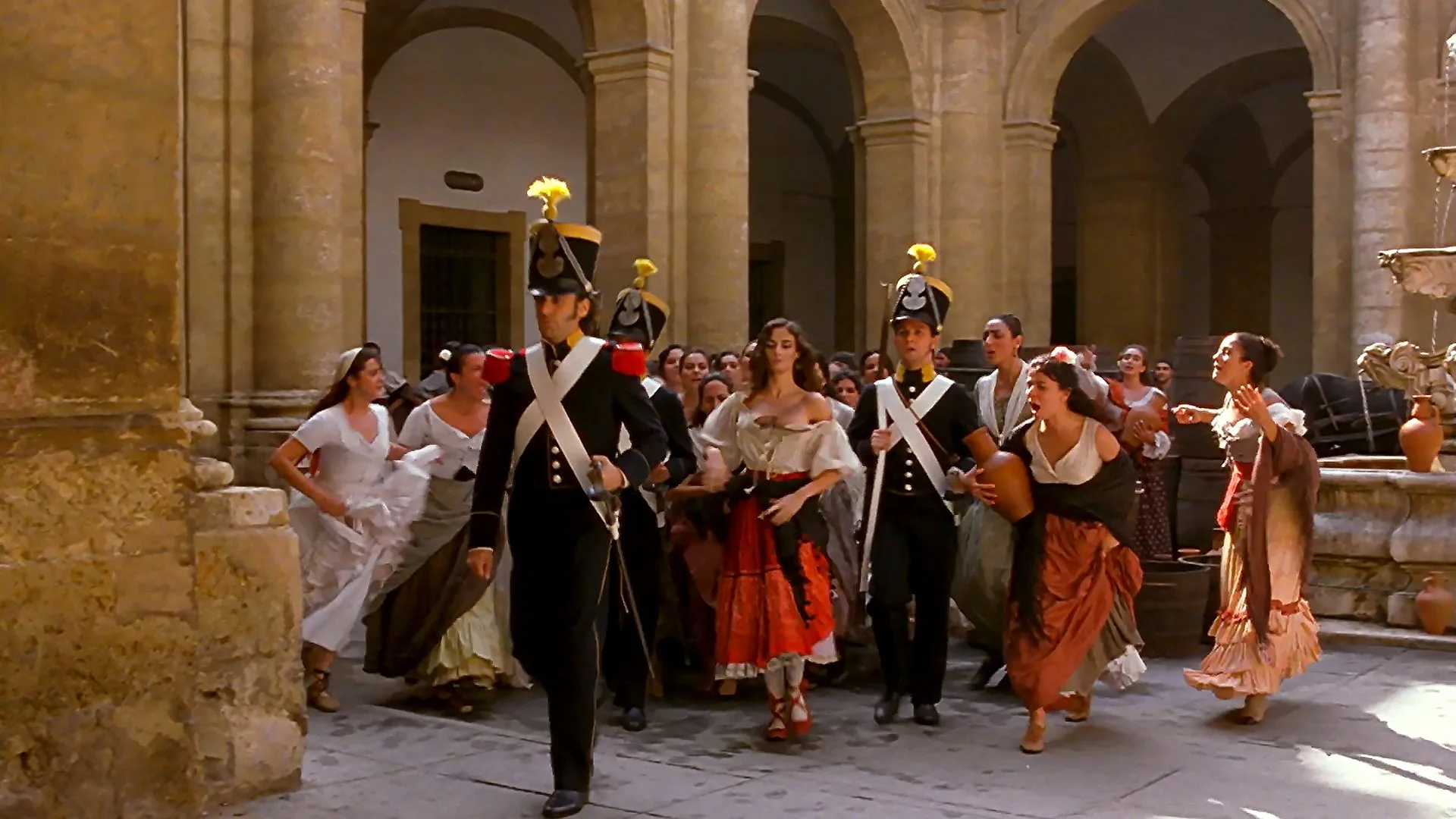
Paz Vega lights the fuse, Leonardo Sbaraglia loses his uniform, morals and mind, and Vicente Aranda watches nineteenth-century Spain burn with lust and jealousy.
A French traveller named Prosper Mérimée meets the condemned outlaw José and visits him in prison, where the former soldier tells the story of the woman who demolished his respectable life. José begins as a stiff, dutiful Basque sergeant stationed near Córdoba’s sweltering cigar factory. When Carmen slashes a co-worker during a vicious quarrel, he is ordered to escort her to jail; instead, she flirts straight through his defences, promises him a night he will never forget and persuades him to let her escape. The resulting demotion and imprisonment should teach him a lesson, but Carmen keeps her sexual promise, and José emerges hopelessly addicted. They meet again in Seville, where she trades her favours for his cooperation with a gang of smugglers. Soon he is ignoring warnings, neglecting duty and waiting outside brothels...
like a lovesick fool. When Carmen turns up with his superior officer, jealousy finally blows the doors off: José kills the man, abandons the army and joins her bandit companions in the hills. Just when he imagines they can live as lovers, Carmen’s brutal husband El Tuerto returns from prison, forcing José into a humiliating triangle that grows steadily more violent. Even after that obstacle is dealt with, Carmen refuses to become anybody’s property, and the arrival of a handsome matador gives José’s paranoia fresh meat. Aranda returns to Prosper Mérimée’s novella rather than recycling Bizet’s opera, shaping the tale as a grubby battle between freedom and possession. At its best, the film is tense, handsome and uncomfortably honest about how desire curdles into control. At its weakest, the supposed grand passion can feel strangely cold; Vega and Sbaraglia generate plenty of physical heat, but not always the emotional chemistry needed to make José’s total collapse convincing. Still, Sbaraglia gives his descent real tragic weight, while Vega supplies the dangerous life force around which the whole lavish machine revolves.
Set in Spain in 1830, during the repressive reign of Ferdinand VII, Carmen unfolds in a society of soldiers, smugglers, prostitutes, aristocrats, bandits and women expected to know their place. Carmen’s refusal to do so is what makes her thrilling—and what makes every possessive man around her reach for a weapon. The production was shot in Córdoba and makes rich use of Andalusian landscapes and architecture: sun-baked stone, narrow streets, military courtyards, city gates and dusty hills where civilisation gives way to outlaw country. The cigar factory is especially memorable, a furnace of sweat, exposed flesh and female aggression that tells us immediately whose territory José has wandered into. Paco Femenía’s golden photography, Yvonne Blake’s sumptuous costumes and José Nieto’s score give the film the polished sweep of an expensive historical romance, though Aranda keeps dragging that elegance back into bedrooms, brothels and bloody confrontations. The vibe is less candlelit Valentine’s card than slow-motion erotic car crash: lush, fatalistic, sometimes lurid, and haunted by the certainty that nobody involved knows when to walk away.
Paz Vega plays Carmen as a lean, dark-eyed sexual predator with a wicked smile and absolutely no interest in behaving like a respectable heroine. She is flirtatious, insolent, funny, calculating and fiercely alive, using her beauty because in this world beauty is one of the few weapons a woman can carry openly. Aranda’s camera is hardly shy about admiring her: Vega appears topless or nude in several scenes, there is full-frontal imagery and the sex is vigorously simulated rather than discreetly hidden beneath tasteful bedsheets. It is not hardcore, but it is considerably more revealing than the average costume drama, with sweat, breasts and naked bodies treated as part of Carmen’s power over José. Whether that feels fearlessly sensual or simply voyeuristic will depend on the viewer, but Vega commits without coyness. Even when the drama around her goes stiff, she remains deliciously untamed—the sort of woman who can make a man throw away his career, his freedom and whatever common sense he had before breakfast.
Spanish Beauty Paz Vega is the Sultry, Irresistible, Wild, Free-spirited, Seductive, Promiscuous & Manipulative Carmen whose Magnetic Allure makes a decorated soldier fall in love with her, destroy his career, his life, and kill for her.
A beautifully made Spanish classic set in 1800s Spain, Carmen (2003) is a film about the lengths that men can go for their obsession over a woman, and the spell that some women can cast over men.
Carmen (Paz Vega) a mid-20s gypsy woman in 19th-century Seville, captivates with dark hair and striking beauty, her vibrant dresses swaying with sultry grace. A free-spirited temptress, she fucks with fiery passion, José in hidden corners and multiple lovers in wild abandon, her voice a teasing lilt, laced with ‘cariño’ and ‘Love is a rebellious bird that nobody can tame.’ Bold and impulsive, she navigates life on her terms, manipulating with charm while craving true connection. Defiant against authority, she fights rivals and defies jealousy, her heart a storm of love and independence. Carmen loves freedom and dance, loathes possession, and thrives on desire’s thrill. Her confident strut and provocative glances seduce effortlessly, her story a dance of love and tragedy.
Paz Vega is every bit that woman in this film, and it’s easy to see why men would be ready to kill or die for her. 🔥🔥
This JUICE page includes 8 highlights of Paz Vega’s Witchy Beauty & Fatal Hotness juiced out of the 2 hour movie. 🔥🔥






Sign in to comment
The same account you use to watch films.