

Celestine (1974) – AKA Célestine… Bonne À Tout Faire
A runaway prostitute becomes a château maid and cures an entire bourgeois household of its stiff morals, stale marriages and tragic shortage of naked women.
When the police raid her provincial brothel, Célestine bolts into the countryside with little more than her nerve and a strategically inadequate scrap of clothing. She hides in the barn of a grand estate, where gardener Sébastien and valet Malou quickly discover that the fugitive is friendly, practical and not burdened by false modesty. Suitably impressed, they persuade the Comtesse de la Bringuette to employ her as a maid.
From there, Jess Franco turns the château into a cheerful sexual madhouse. Célestine does not scheme, blackmail or demand payment; she simply spots frustration and treats it personally. She distracts Marc, the studious young man of the family, gives innocent cousin Martine a rather hands-on education, comforts the servants and makes herself available to the sexually neglected Count, whose chilly marriage...
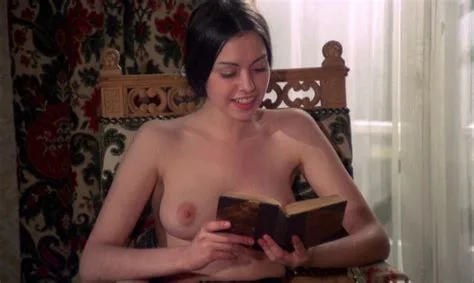
has left him climbing the walls. Even the bedridden old Duke receives daily erotic readings, delivered by Célestine in the nude with the calm professionalism of a nurse checking his pulse. The funniest stretch plays like bedroom farce with its corset unlaced: lovers arrive one after another, doors and curtains become emergency hiding places, and Célestine somehow keeps the whole ridiculous machine moving. The plot eventually develops teeth when a man from her former life tracks her down and forces her into a robbery that could destroy the trust she has earned. Until then, Franco keeps everything racing along with rude jokes, exaggerated performances and softcore encounters that are more playful than sweaty. This is no faithful version of Octave Mirbeau’s dark social satire; it borrows the maid, the period setting and the bourgeois household, then throws the rest over the hedge. Yet beneath the bare bottoms and bedroom traffic is a surprisingly affectionate idea: Célestine’s open-hearted sexuality revives people who have forgotten how to enjoy one another. The filmmaking is cheap and occasionally clumsy, the music repeats itself shamelessly and the acting is hardly subtle, but the picture has warmth, momentum and the rare good sense not to take its naughtiness seriously.
Set in provincial France at the beginning of the twentieth century, the film unfolds around a handsome château, its sunny park, barn, corridors and refined bedrooms. The costumes suggest the Belle Époque, but the spirit is pure 1974 sexual liberation: bright, cheeky, anti-authoritarian and convinced that a little pleasure can do more good than a library full of respectable advice.
Lina Romay owns the film with her mischievous smile, dark hair, voluptuous body and wonderfully relaxed lack of inhibition. She plays Célestine as generous rather than predatory—a naturally sensual woman who enjoys men, women and the commotion she creates. Pamela Stanford supplies blonde, wide-eyed sweetness as Martine, while Monica Swinn and the other women add to the château’s growing carnival of desire. There is abundant topless and full-frontal nudity, lesbian play and plenty of simulated sex, but no hardcore penetration; the camera is candid about Romay’s body while the mood remains more saucy French bedroom comedy than explicit pornography.














Sign in to comment
The same account you use to watch films.