

Through the Looking Glass (1976)
A bored society wife peers into an attic mirror and finds Daddy, desire and damnation staring back in one of the strangest hardcore nightmares of the 1970s.
Catherine lives in polished luxury with a husband who barely reaches her and a young daughter watching from the edges, yet the grand family mansion feels less like a home than an expensive display case. After playing the dutiful hostess downstairs, she slips into a private attic room where an antique oval mirror becomes the focus of her secret life. She admires herself, masturbates before the glass and gradually senses a commanding male presence on the other side. It appears as a demon, but also bears the face and manner of her late father, whose hold over Catherine clearly began long before his death. The film then starts loosening its grip on ordinary reality. Memories, fantasies and present-day encounters bleed into one another as Catherine’s marriage frays and the mirror feeds an obsession she no longer wants to resist....
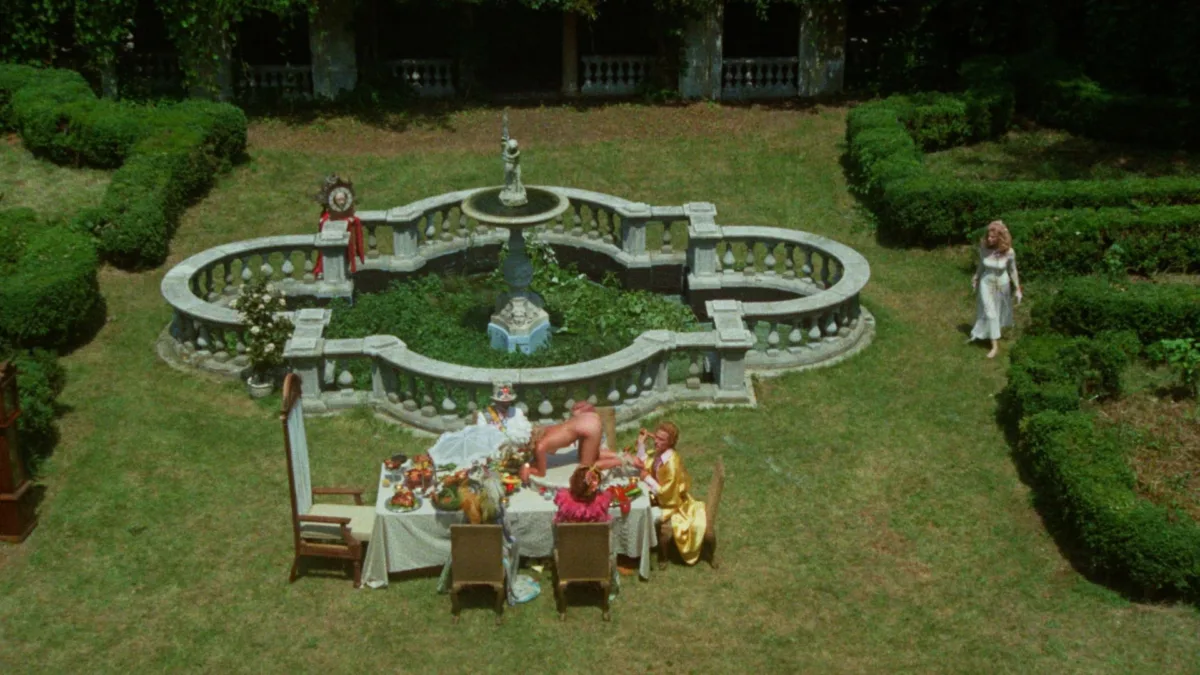
Glimpses of childhood, disturbing family intimacy and the behaviour of people around the estate suggest that her desire is tangled with abuse, repression and trauma rather than simple lust. When the figure invites her to cross over, she is drawn into a grotesque sexual Wonderland of ritualistic couplings, corrupted garden-party games and bodies treated as playthings.
Director Jonas Middleton uses hardcore sex as psychological horror: the encounters are explicit, but deliberately cold, compulsive and increasingly unpleasant. João Fernandes photographs the mansion, mirrors and flesh with far more care than the genre usually received, while Harry Manfredini and Arlon Ober’s ominous music keeps whispering that Catherine’s promised paradise is really a trap. Some performances are mannered and a few symbols are hammered home, yet the picture’s commitment is unnerving. It begins like an affluent wife’s forbidden fantasy and mutates into a Freudian Gothic fever dream about vanity, incestuous damage and the way buried wounds can quietly poison a family. By the time Catherine approaches the mirror’s deepest chambers, the film has stopped pretending that sexual freedom is what waits there.
This is pure mid-1970s New York porno-chic: ambitious filmmakers had money, theatrical exhibition and the nerve to mix explicit sex with European-style surrealism and Gothic horror. The production was shot at Winfield Hall, the old Woolworth estate in Glen Cove, Long Island, whose sweeping grounds, shadowy rooms and faded grandeur give the story a genuine haunted-house atmosphere. Pastel fashions, heavy makeup, expensive cars and languid wealth create a decadent upper-class shell, while the attic and the world beyond the mirror turn that elegance clammy, theatrical and hellish. The vibe is less couples-night erotica than Polanski wandering into an adults-only Fellini nightmare after taking the wrong pill.
Catharine Burgess is a striking lead: statuesque, pale, beautifully dressed and possessed of the remote, slightly dazed allure of a fashion model sleepwalking through her own nervous breakdown. Her stiffness actually suits Catherine, a woman whose femininity has become both armour and prison, and she throws herself into scenes that demand emotional exposure as well as complete physical nudity. The film is fully hardcore, with unsimulated oral sex, penetration, masturbation, group activity and extreme close-ups, but anyone expecting a cheerful parade of bedroom athletics is in for a rude awakening. Burgess is undeniably gorgeous and frequently naked, yet Middleton presents her body as the battleground of the story rather than uncomplicated eye candy. She is sensual, vulnerable and brave—and the closer she moves toward surrender, the less sexy and more frightening the film becomes.



Sign in to comment
The same account you use to watch films.