

Immoral Tales (1974) – AKA Contes Immoraux
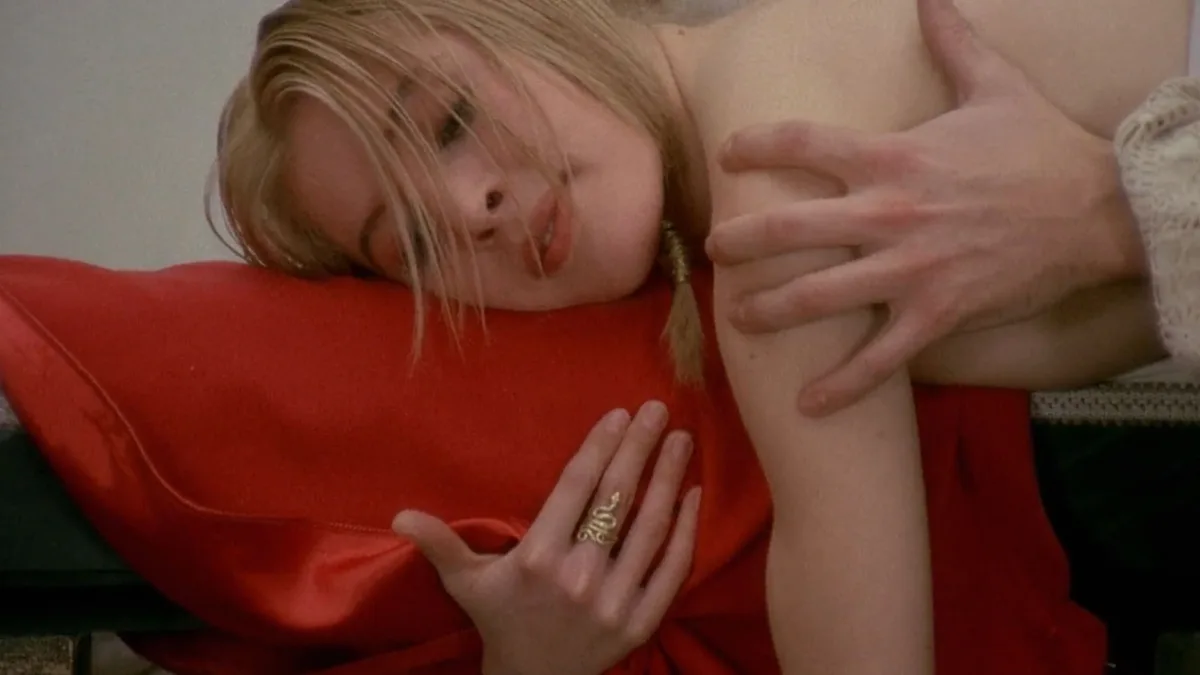
Four forbidden tales march backward through history, where desire rises with the tide, faith meets a cucumber, and aristocratic manners end in blood.
Walerian Borowczyk’s erotic anthology is less a conventional movie than a cabinet of beautifully photographed sins, arranged in reverse chronological order and viewed with the cool eye of a surrealist peeping through a keyhole. “The Tide” begins on the Normandy coast, where smug young André engineers some privacy with his sixteen-year-old cousin Julie as the sea closes around them. His lecture about tides becomes a calculated sexual initiation, and the coercive undertone makes the episode more troubling than playful, however ravishing the cliffs, waves and wheeling seabirds may look. “Thérèse Philosophe” moves to 1890 and follows a devout girl whose religious fervour is already tangled up with physical curiosity. Punished by her aunt and locked in a storeroom, Thérèse discovers erotic pictures, suggestively shaped household objects...
and a supply of cucumbers; Borowczyk cuts between Catholic imagery and her solitary experiments until worship, repression and arousal seem to belong to the same private ritual. The film then jumps back to Hungary in 1610 for its richest and most sinister chapter. Paloma Picasso’s Countess Erzsébet Báthory tours the countryside with her androgynous page, gathering village women for what appears to be a generous invitation to the castle. Once inside, the occasion becomes a dreamlike orgy of naked bodies, privilege and cruelty, building toward the countess’s notorious blood bath. Finally, in 1498, Lucrezia Borgia arrives at the Vatican with her husband and enters the decadent orbit of Pope Alexander VI and her brother Cesare. While a Dominican preacher condemns corruption outside, the Borgias examine obscene drawings and prepare a family ceremony that makes ordinary bedroom scandal look positively respectable. The storytelling is deliberately thin, and anyone expecting four tightly plotted dramas may find stretches of it slow or repetitive. Borowczyk is far more interested in textures, flesh, jewellery, fruit, waves, candles, religious ornaments and the rituals powerful people invent to dignify their appetites. His camera can be leering, but it is also oddly detached, repeatedly abandoning human indecency for birds, livestock or landscape, as though nature could not care less about our moral labels. The Báthory section is the knockout—lush, eerie and genuinely unsettling—while the Borgia finale delivers black comedy and cheerful blasphemy. Taken as a whole, the film feels hypnotic, provocative and sometimes grubby: art-house erotica with dirty fingernails and an Old Master’s eye.
The journey runs from contemporary 1970s France through the late nineteenth century, seventeenth-century Hungary and Renaissance Italy, though the production itself is unmistakably French. Normandy’s beaches and cliffs give the opening its windswept sensuality, while countryside, a real church and richly dressed period interiors create the later worlds. The vibe shifts from seaside naturalism to cramped religious fever, then into bloody Gothic pageantry and Vatican farce—like wandering backward through a European museum after somebody has removed every fig leaf.
This is an ensemble of female presences rather than a single leading lady, and Borowczyk photographs them with unapologetic fascination. Lise Danvers gives Julie a wary softness that prevents the opening from becoming harmless seaside naughtiness, while Charlotte Alexandra makes Thérèse’s private rebellion nervous, strange and intensely physical. Paloma Picasso owns the film: dark-eyed, imperious and magnificently severe, she plays Báthory as a woman accustomed to treating beauty, bodies and blood as personal property. Florence Bellamy’s Lucrezia is softer and more decorative, but perfectly suited to the final tale’s corrupt Renaissance glamour. The film contains prolonged nudity, full-frontal imagery, masturbation, simulated oral sex, lesbian contact, incestuous ritual and blood-soaked violence. It is explicit softcore rather than hardcore, but discreet it certainly is not—and because two stories involve youthful characters and coercion, some scenes disturb as much as they arouse.

















Sign in to comment
The same account you use to watch films.