

The Idiots (1998)
A raw, funny and deeply uncomfortable Danish drama about respectable adults playing at madness—until one quiet woman forces them to face the real thing.
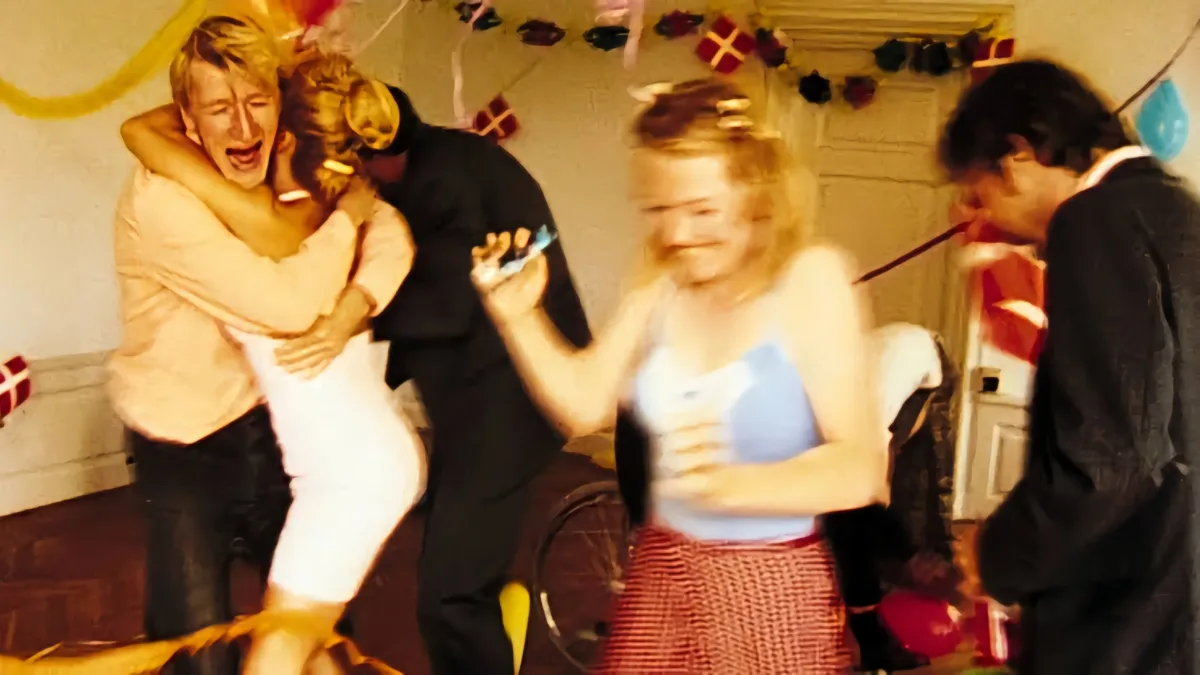
Karen is eating alone in an expensive restaurant when a disruptive group of supposedly disabled adults turns the room upside down. One of them, Stoffer, takes her hand and refuses to release it, drawing her into their taxi and then revealing that the whole performance was an act. Curious, lonely and strangely unwilling to return home, Karen follows them to the large suburban villa they have occupied. Led by the arrogant, charismatic Stoffer, these middle-class rebels seek their “inner idiot” by behaving as if they are mentally disabled, hoping to smash through good manners, responsibility and bourgeois self-control. They invade restaurants, swimming pools, factories and public spaces, sometimes exposing genuine hypocrisy and sometimes looking like spoiled adults bullying everyone around them. Karen rarely joins their games, yet...
she accepts them with a warmth that their loud philosophy cannot manufacture. As the experiment grows more intense, ordinary commitments begin intruding: jobs, spouses, parents and emotional problems cannot be laughed away forever. Stoffer’s birthday becomes a naked, chaotic group-sex session, while Josephine and the sweet-natured Jeppe slip aside and form a tender connection of their own. When Josephine’s father arrives to take her home, the commune’s talk of liberation suddenly meets real authority, dependence and pain. Stoffer responds by demanding the ultimate test: each member must perform the act before the people who know them best. Their courage quickly evaporates, the group starts breaking apart, and only Karen seems prepared to discover whether their rebellion has any truth behind it. The reason she has stayed with them—and what she may be running from—hangs quietly over the final stretch.
Lars von Trier shoots the film with a restless handheld camera, natural light, rough direct sound and deliberately awkward framing, turning fiction into something resembling an intrusive home movie. Interview fragments make the story feel like a recollection of an experiment that has already gone wrong. Even the explicit sex is not polished or seductive; it strips away dignity and tests the actors, characters and audience alike. The rawness can be exhausting, but that discomfort is very much the point.
Made at the birth of the late-1990s Dogme movement, the film carries the era’s taste for breaking cinematic rules and attacking comfortable middle-class life. It was filmed around Søllerød and Holte, wealthy green suburbs north of Copenhagen, with the commune based in a spacious villa and the opening encounter taking place in the refined surroundings of Søllerød Kro. That contrast gives the film its peculiar vibe: childish anarchy performed amid tasteful homes, trimmed gardens and respectable Danish calm. It swings between black comedy, social provocation and bruising tragedy, often making you laugh before leaving you ashamed that you did.
Bodil Jørgensen gives Karen a soft, ordinary femininity that becomes far more affecting than conventional screen glamour. Her open face, hesitant smile and wounded stillness quietly dominate a room full of noisy exhibitionists; she looks like a woman who needs kindness, not another political theory. Anne Louise Hassing brings a composed, attractive warmth to Susanne, while Louise Mieritz makes Josephine fragile, sensual and painfully vulnerable. There is extensive full-frontal nudity, an erection and a notorious group-sex scene containing brief unsimulated penetration performed by body doubles, but this is not glossy erotica. The nakedness is sweaty, exposed and intentionally graceless, with the women shown as natural bodies rather than airbrushed fantasies. Its real sensual charge lies in fleeting tenderness—especially Josephine and Jeppe reaching for each other while the rest of the house turns freedom into another cruel performance.





Sign in to comment
The same account you use to watch films.