

Paradise (1982)
Gorgeous Innocent American Sweetheart Phoebe Cates, Young & Breathtaking. Paradise gave her the most Beautiful showcase in cinema. Juiced to 27 minutes.
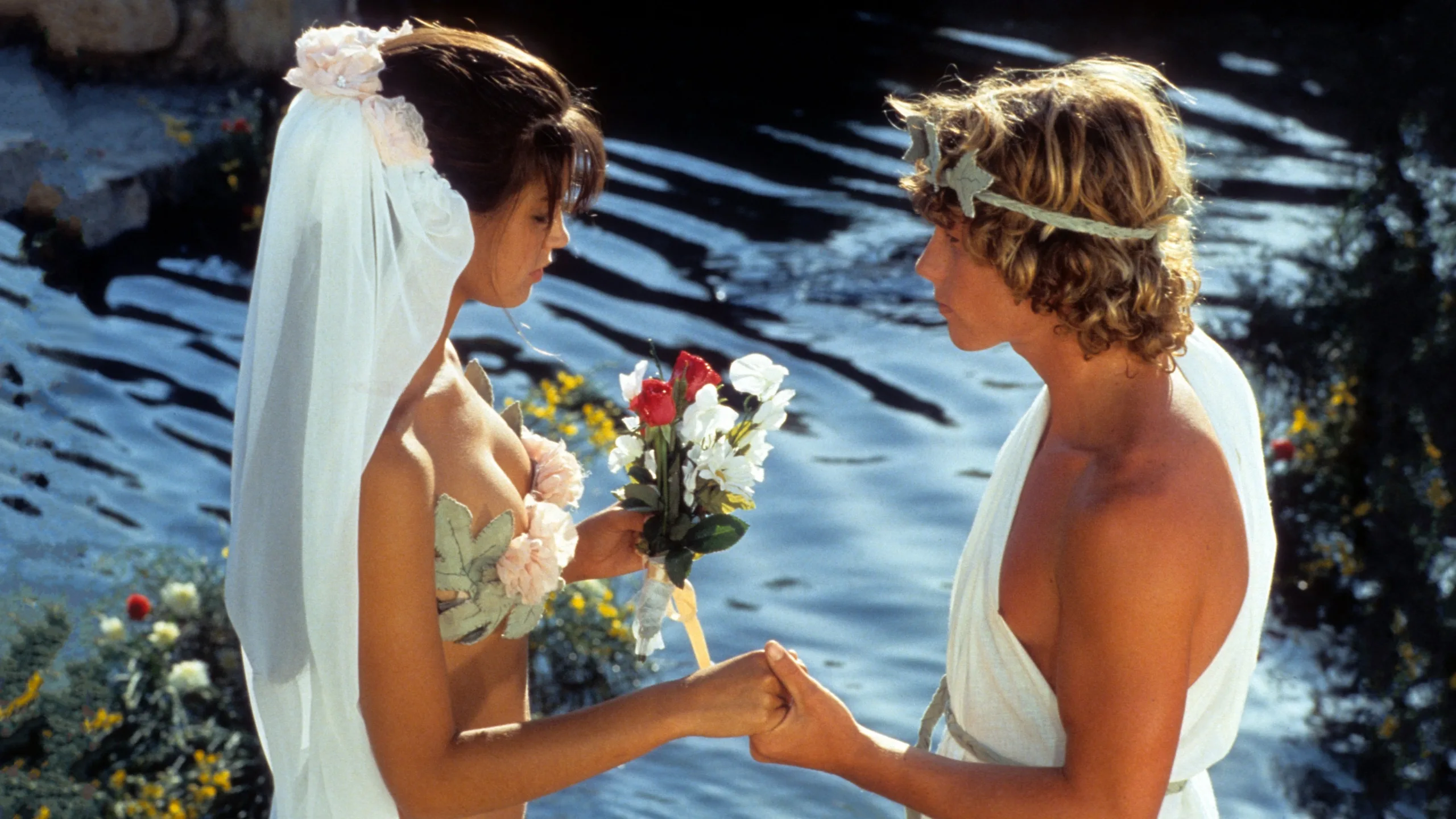
The Blue Lagoon swaps surf for sand as two orphaned teens dodge a lusty slaver, discover an oasis and learn that paradise rarely comes without predators.
Let’s not kid ourselves: Stuart Gillard’s Paradise is The Blue Lagoon with camels, but that doesn’t mean this sun-baked romantic adventure is entirely without charm. In 1823, Sarah, the sheltered daughter of a wealthy British merchant, and David, the son of American missionaries, are travelling by caravan from Baghdad to Damascus when Sarah catches the eye of a slave trader known as the Jackal. He wants her for his harem, and when money fails to secure her, he attacks the caravan with considerably less diplomacy. David, Sarah and her loyal servant Geoffrey escape the massacre, though their relief is short-lived: Geoffrey goes looking for help, walks into the Jackal’s camp and leaves the youngsters alone in hostile country. Their trek west becomes a rough-and-ready survival story involving thirst, hunger, wild animals,...
uncooperative camels and a few chimpanzees that seem to have wandered in from a lighter film. Eventually they discover a lush oasis by the sea, build themselves a home and settle into an Adam-and-Eve existence free from parents, manners and most of their clothing. Friendship turns into attraction, awkward curiosity becomes physical intimacy, and David gradually changes from a rather helpless boy into someone prepared to defend their fragile life together. The Jackal, however, keeps circling their paradise, and his pursuit eventually drives the couple from one refuge to another while David begins thinking less about escape and more about fighting back. Gillard reaches for innocence, first love and self-discovery, but keeps crashing his dreamy romance into murder, sexual menace and broad animal comedy. The script is clumsy, the villain is a lurid stereotype and Willie Aames occasionally acts as though he is waiting for someone to explain the scene to him. Yet Adam Greenberg’s photography, the youthful chemistry and Phoebe Cates’s remarkable camera presence give the film a peculiar nostalgic pull. It is silly, slow and shamelessly derivative, but also sincere enough that its better moments retain a soft, melancholy sweetness.
Although set in the Middle East during the Georgian era, Paradise is unmistakably a product of the early 1980s: feathered hair, soft-focus sensuality, a syrupy pop theme sung by Cates and the lingering belief that beautiful young people communing with nature could carry an entire movie. It was filmed on location in Israel, using Jerusalem, the Dead Sea, the Sea of Galilee, caves at Beit Guvrin and a Turkish mosque near Tel Aviv to create its storybook route between Baghdad and Damascus. The rocky desert, blue water, waterfalls and green pockets of vegetation supply most of the production value, making the oasis feel genuinely inviting even when the drama feels synthetic. The resulting vibe is part desert chase, part adolescent fantasy and part late-night cable curiosity: leisurely, picturesque, frequently absurd and far more interested in bodies against scenery than historical realism.
Phoebe Cates, making her feature debut, is plainly the reason Paradise remained lodged in the memory of a generation of VHS and cable viewers. Her acting is understandably inexperienced, but she gives Sarah a bright, vulnerable warmth and has the sort of effortless screen magnetism that makes the camera seem besotted with her. The film contains extensive skinny-dipping, waterfall bathing, frontal and rear nudity, intimate touching and simulated lovemaking, making it considerably more explicit than its innocent-romance packaging suggests. However, Cates was seventeen during production, and some revealing close-ups were reportedly created with body doubles without her approval; she later expressed regret and refused to promote the picture. That history makes the film’s erotic gaze uncomfortable rather than carefree, even if Cates herself emerges as poised, luminous and clearly destined for better material.
Phoebe Cates: “I was only 17 when I did my nude scenes in Paradise.”
Paradise (1982) is the HOTTER Blue Lagoon and Phoebe Cates 🔥🔥 is 10x Prettier 💘 and Hotter 🔥 than Brooke Shields. Enjoy her Sweet Beauty in this 27 minutes Juiced version of the film.



Sign in to comment
The same account you use to watch films.