

The Beast (1975) – AKA La Bête
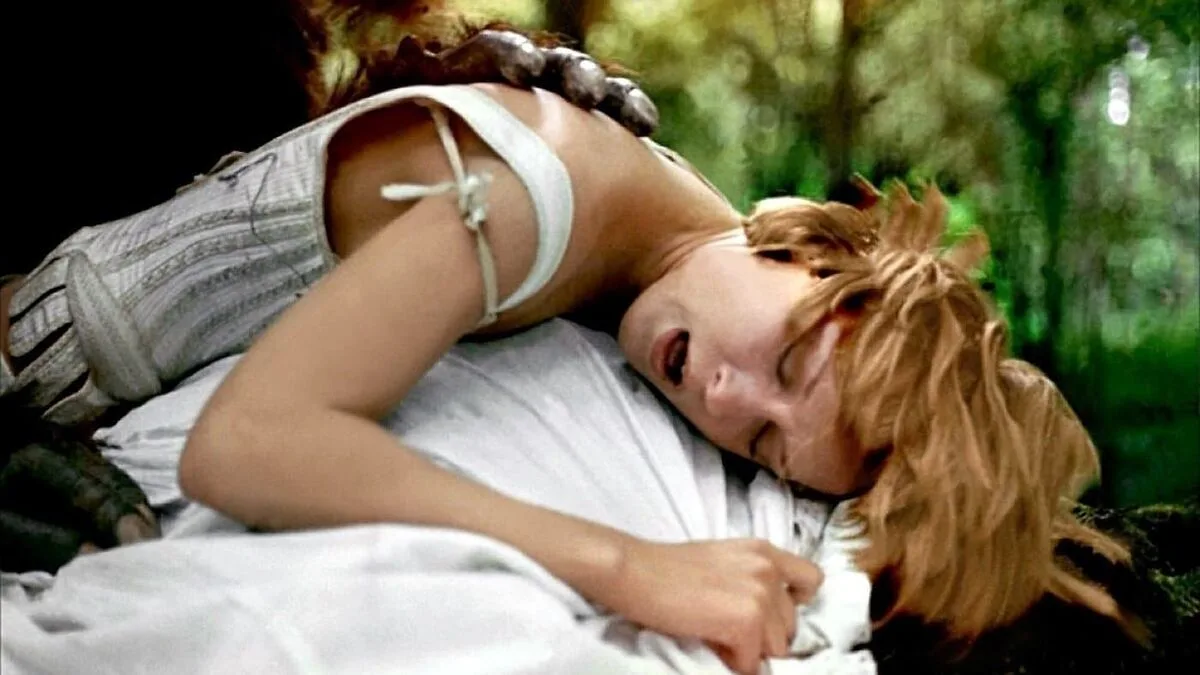
A broke aristocratic clan plans a respectable wedding, only for a horny family curse to crash the château with fur, scandal and one outrageous erection.
Walerian Borowczyk opens with the graphic mating of two horses, so there is no mistaking the territory: beneath mankind’s polished manners, breeding is still breeding. At a crumbling country estate, the near-bankrupt Marquis de l’Espérance is desperate to marry his odd, hulking son Mathurin to Lucy Broadhurst, a wealthy young American whose inheritance depends upon the wedding taking place quickly and being blessed by a particular cardinal. There are complications. Mathurin has never been baptised, his disabled great-uncle fiercely opposes the match, and his father is working overtime to conceal whatever is underneath the young man’s beard, plaster cast and barnyard manners. Lucy arrives with her sophisticated aunt Virginia expecting an eccentric engagement party, but finds a household where everyone is lying, spying, bribing the...
clergy or sneaking off for sex. She is less frightened than fascinated. Exploring the château, she discovers erotic drawings, a torn corset displayed like a holy relic and an illustrated account of Romilda, an eighteenth-century ancestor said to have encountered a monstrous, bear-like beast in the surrounding forest. By nightfall, curiosity has turned into desire. As the family waits for the cardinal and the proposed marriage begins to look increasingly rotten, Lucy slips into a feverish dream in which she becomes Romilda, follows a lamb into the woods and meets the creature behind the legend. What starts as pursuit develops into an extended sexual nightmare—or fantasy—in which fear, appetite, revulsion and pleasure become impossible to separate.
Borowczyk cuts between Lucy’s arousal, Romilda’s ordeal and the château’s mounting chaos, gradually making the respectable humans appear more corrupt and ridiculous than the animal outside. The result is not conventional horror and certainly not straightforward pornography. It is a poisonous comedy of manners dressed as a dirty fairy tale, taking aim at inherited wealth, arranged marriage, religious hypocrisy and the thin layer of etiquette covering raw instinct. The imagery is polished and carefully framed, while Scarlatti’s jaunty harpsichord turns scenes that should be horrifying into something absurdly playful. You may laugh, recoil or stare in disbelief—often during the same shot—but boredom is unlikely. The film gets under the skin because its obscenity is not merely there to excite; it keeps asking whether civilisation controls desire or simply gives it better clothes.
Made during the permissive, censor-baiting atmosphere of mid-1970s European cinema, the story mixes contemporary France with an eighteenth-century dream world. Filmed around a secluded château in the French countryside, with formal rooms, stables and damp woodland doing most of the visual work, it has the vibe of a grand old family estate sweating through its final indecent weekend: elegant, decayed, secretive and increasingly unhinged.
Lisbeth Hummel plays Lucy with fresh-faced, blue-eyed curiosity and a sly sensual confidence that grows as the night progresses; she is not merely an innocent in danger but a young woman actively intrigued by the forbidden. Sirpa Lane, statuesque and striking as Romilda, throws herself physically into the notorious forest sequence, shifting from terrified prey to an almost commanding erotic presence. Elisabeth Kaza adds mature, worldly allure as Aunt Virginia. The film is extremely explicit: abundant full-frontal nudity, female masturbation, real horse mating and prolonged simulated sex with a monster whose gigantic prosthetic equipment is displayed without the slightest modesty. This is art-house erotica with its trousers around its ankles—and absolutely no intention of pulling them back up.

Sign in to comment
The same account you use to watch films.