

Venus in Furs (1969) – AKA Paroxismus
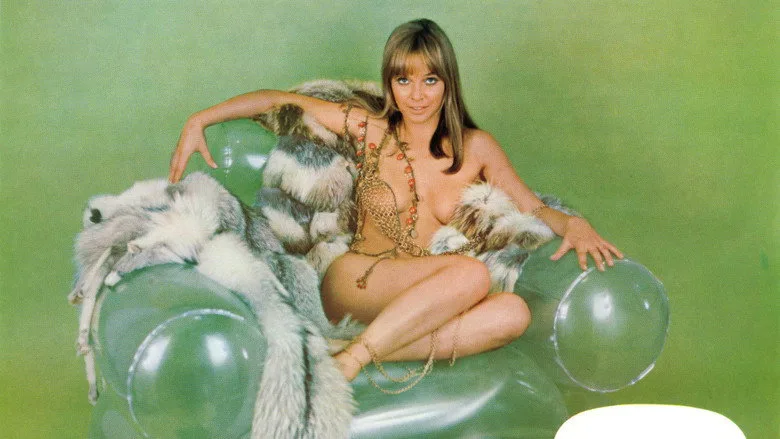
A dead blonde in a fur coat walks into a Rio jazz club, and one haunted trumpeter learns that desire, guilt and revenge can all keep the same wicked beat.
Jimmy Logan is an American jazz trumpeter drifting through Istanbul in an alcoholic, druggy fog when the sea delivers a sight capable of sobering any man: the half-naked corpse of Wanda Reed, a beautiful blonde he recognises from a party hosted by the sinister playboy Ahmed. At that gathering, Jimmy stumbled upon Ahmed, art dealer Percival and fashion photographer Olga subjecting Wanda to a vicious sadomasochistic game. He watched, froze and failed to intervene—a cowardly moment that now gnaws at him as much as the murder itself. He buries his trumpet, abandons Turkey and runs to Rio de Janeiro, where singer Rita gives him affection, work and a chance to recover. Rita is warm, loyal and flesh-and-blood real, but Jimmy is already in love with a ghost. One evening Wanda—or a woman identical to her—walks into his nightclub wearing...
fur and looking very much alive. She takes Jimmy as her lover, drawing him away from Rita and deeper into a haze where memory, fantasy and reality become impossible to separate. Meanwhile, the decadent trio responsible for Wanda’s death are confronted one after another by their supposedly dead victim, each encounter staged as a private erotic nightmare with Wanda turning their own appetites against them. Jimmy slowly realises that the woman in his bed has unfinished business, yet his desire is stronger than his common sense. Even as the police begin connecting Wanda to the deaths, he follows her back toward Istanbul and the scene of the original crime, unsure whether he is protecting a fugitive, surrendering to a spirit or losing his mind.
Jess Franco tells all this less like a conventional thriller than a long jazz solo played after midnight: scenes slip backwards and forwards, slow motion stretches desire into delirium, coloured filters flare across the screen, and Jimmy’s mournful trumpet seems to narrate feelings he cannot express. The voice-over occasionally tries too hard to explain matters, but the film is at its best when it stops explaining and simply lets Wanda glide through mirrors, smoky clubs and bedrooms. It is erotic horror with a surprisingly melancholy core—a tale of guilt, obsession and a passive man bewitched by a woman who has returned with a very definite purpose.
Made at the end of the swinging sixties, the film lives in that peculiar jet-set world of wealthy degenerates, psychedelic interiors, narcotic parties and musicians wandering between continents with little more than a horn and a hangover. The story moves from Istanbul’s beaches and private villas to Rio’s carnival, nightclubs and hotel rooms, with location work in Brazil giving the picture some genuine tropical heat. Its vibe is dreamy rather than realistic: half Euro-horror, half doomed romance, with the plot floating on jazz, incense and bad decisions.
Maria Rohm makes Wanda more apparition than ordinary heroine: pale, blonde, cool-eyed and often wrapped in little besides a fur coat, she can appear wounded in one shot and lethally composed in the next. Her allure is quiet and unnerving; she does not chase men so much as wait for them to surrender. Barbara McNair supplies the warmer sensuality as Rita, singing beautifully and making Jimmy’s betrayal sting because she is plainly the healthier woman to love. Margaret Lee adds a harder, bisexual decadence as Olga, while Klaus Kinski naturally looks as though respectable behaviour has never crossed his mind. There is plentiful female nudity, soft-focus lovemaking, whipping and an ugly sexual assault at the heart of the story, but no hardcore action. By modern standards it is more sensuous than explicit—an elegant, kinky ghost story interested less in anatomical detail than in the dangerous sight of Maria Rohm slowly letting that fur slide from her shoulders.



Sign in to comment
The same account you use to watch films.