

A Real Young Girl (1976) – AKA Une Vraie Jeune Fille
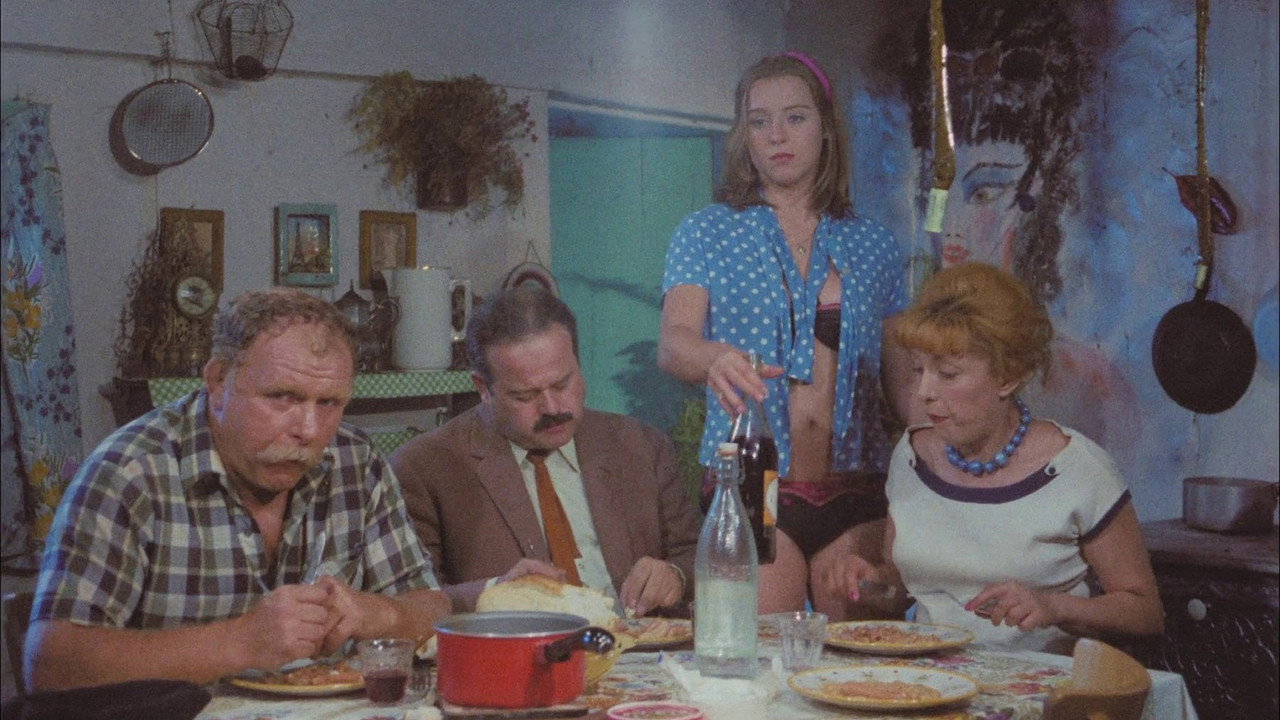
A raw, strange and deliberately uncomfortable coming-of-age film in which a lonely teenage girl spends one suffocating summer wrestling with desire, shame and an obsessive attraction to a handsome sawmill worker.
Alice returns from boarding school to spend August 1963 with her parents in the rural Landes. Home offers little comfort: her mother is bitter and frustrated, her father is coarse, and the family sawmill fills the days with noise, sweat and monotonous labour. Left largely alone, Alice pours her private thoughts into a diary while the film slips freely between daily life, memory and fantasy. Her restless attention soon settles on Jim, the attractive new worker employed by her father. He becomes the centre of an increasingly feverish inner world in which curiosity, romance, humiliation and sadomasochistic fantasy become hopelessly tangled. Alice decides that Jim should be her first lover, but he is already engaged and refuses to take her advances seriously. His resistance...
only sharpens her fixation, pushing her from distant watching and awkward flirtation toward increasingly reckless attempts to get him alone. Eventually she arranges a secret nighttime meeting, only for her parents to discover the scheme and prevent her from leaving. Jim nevertheless tries to reach her by another route, leading the story toward its dark final turn.
Catherine Breillat tells all this with very little conventional polish or romantic comfort. The film is blunt, dreamlike and sometimes mordantly funny, mixing sex with mud, insects, livestock, machinery and bodily fluids until desire itself seems grubby, bewildering and faintly dangerous. It can be repetitive and technically rough, but that roughness is part of its troubling personality: this is less a seductive erotic drama than an intimate, confrontational portrait of adolescent obsession.
Although it finally reached audiences in 1999 after spending decades in distribution limbo, the picture was shot in the mid-1970s and is set in the French countryside of 1963. Filmed in the Landes region, it has the heavy, stagnant atmosphere of an isolated farming community during a long summer—cornfields, dusty roads, animal pens and the clatter of the sawmill replacing the beaches and glamour usually associated with French erotic cinema. Everything feels hot, enclosed and slightly rotten. Breillat occasionally finds pastoral beauty there, but she keeps staining it with sweat, rubbish, blood, dirt and intrusive sounds. The result is rural nostalgia turned inside out: languid and sensuous in texture, yet psychologically claustrophobic and hostile.
Charlotte Alexandra gives Alice a sulky, withdrawn physical presence that can suddenly become bold, calculating or openly defiant. Her performance is intentionally unpolished, matching a girl who understands the force of her impulses before she understands herself. Alexandra never plays Alice as a sweet innocent or a polished seductress; she makes her curious, angry, vain, frightened and capable of being both ridiculous and unsettling. The film contains extensive full-frontal nudity, male nudity, frank sexual fantasy and unusually graphic bodily imagery, but anyone expecting glossy soft-core pleasure is likely to be surprised. Breillat repeatedly spoils the voyeuristic view with awkwardness, degradation and disgust. Alexandra’s fearlessness holds the picture together, yet the camera’s fixation on a character of about fourteen makes the experience ethically difficult by design. It is explicit cinema meant to provoke and disturb rather than flatter the viewer.
Reluctantly, a sulky adolescent returns to her parents’ house for yet another boring summer vacation, dabbling in desire and the art of desirability, eventually mixing reality with vision, caged fantasies with the fierce female sexuality.







Sign in to comment
The same account you use to watch films.