

The Story of Sin (1975) – AKA Dzieje Grzechu
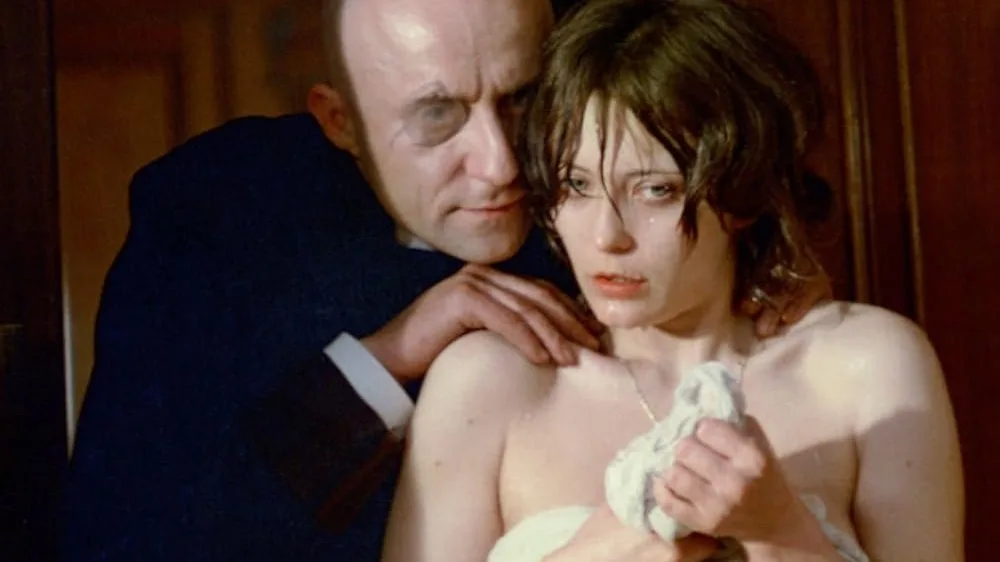
A virginal Polish beauty follows one forbidden love across Europe, only to find that passion opens doors respectable society prefers to keep locked—and some lead straight to hell.
Ewa Pobratyńska is a devout young woman from an impoverished noble family, living under the thumb of anxious parents and a Catholic morality obsessed with impure thoughts. Then Łukasz Niepołomski rents a room in their Warsaw home. He is handsome, educated, attentive—and inconveniently married. Their attraction begins with glances and hesitant conversation, but soon becomes the one honest thing in Ewa’s cramped existence. When Łukasz’s efforts to divorce fail and her mother pushes him away, Ewa refuses to behave like the obedient daughter everyone expects. Learning that he has been wounded in a duel, she abandons home and work to nurse him, and their restrained courtship finally turns physical. Brief happiness gives way to separation when Łukasz leaves to continue pursuing his freedom, unaware that Ewa is...
pregnant. From there, her search for him becomes a breathless, increasingly grim journey through Warsaw and across Europe. Letters go astray, meetings are missed, promises rot, and every man who offers help seems to want possession of her body, loyalty or conscience in return. A compassionate count gives her shelter and falls for her; later, the ruthless Pochroń and his partner recognize how easily longing and guilt can be turned into tools for fraud, blackmail and murder. Ewa is dragged from romantic obsession into crime, degradation and prostitution, yet some stubborn part of her still believes reunion with Łukasz might restore the woman she once was.
Walerian Borowczyk films this descent neither as a bawdy romp nor as a tidy sermon about a “fallen woman.” It is a dark, fast-moving melodrama about desire colliding with hypocrisy, chance and male appetite. His camera keeps noticing gloves, letters, paintings, furniture, discarded clothes and watchful faces, making the material world feel both sensuous and quietly threatening. The narrative can leap abruptly between countries and calamities, but that feverish rush suits Ewa’s state of mind: she is always chasing love, always arriving a moment too late. What gets under the skin is that she never becomes merely wicked or foolish. She remains painfully human—a woman whose first taste of passion grows into an addiction to hope, long after hope has ceased to deserve her.
Set around the turn of the twentieth century, the film inhabits a Europe of rented rooms, railway journeys, aristocratic estates, confessionals and rigid social ranks. Although the story wanders through Warsaw, Rome, France and Berlin, the production was shot in Łódź, whose streets and interiors convincingly impersonate that wider world. The vibe is elegant but airless: lace curtains, old books, sombre bedrooms and beautiful objects surrounding people who are emotionally cornered. It feels like Zola filtered through a 1970s Polish art-house sensibility—earthy, melancholy, anti-clerical and heavy with approaching disaster.
Grażyna Długołęcka, making her film debut as Ewa, carries the picture with wide-eyed softness, dark-haired beauty and a vulnerability that never turns limp. She can look modest and almost childlike in one scene, then startlingly carnal once desire takes command. Borowczyk photographs her face and body with unmistakable fascination, but this is far less explicit than his notorious reputation may suggest: there is nudity and frank lovemaking, though only in a handful of scenes and without turning the drama into pornography. Długołęcka’s real allure lies in the contrast between her graceful femininity and Ewa’s growing desperation. She is lovely enough to stop a room, sensual enough to explain the trouble, and emotionally naked long before the clothes come off.

Sign in to comment
The same account you use to watch films.