

The Sentimental Education of Eugenie (2005)
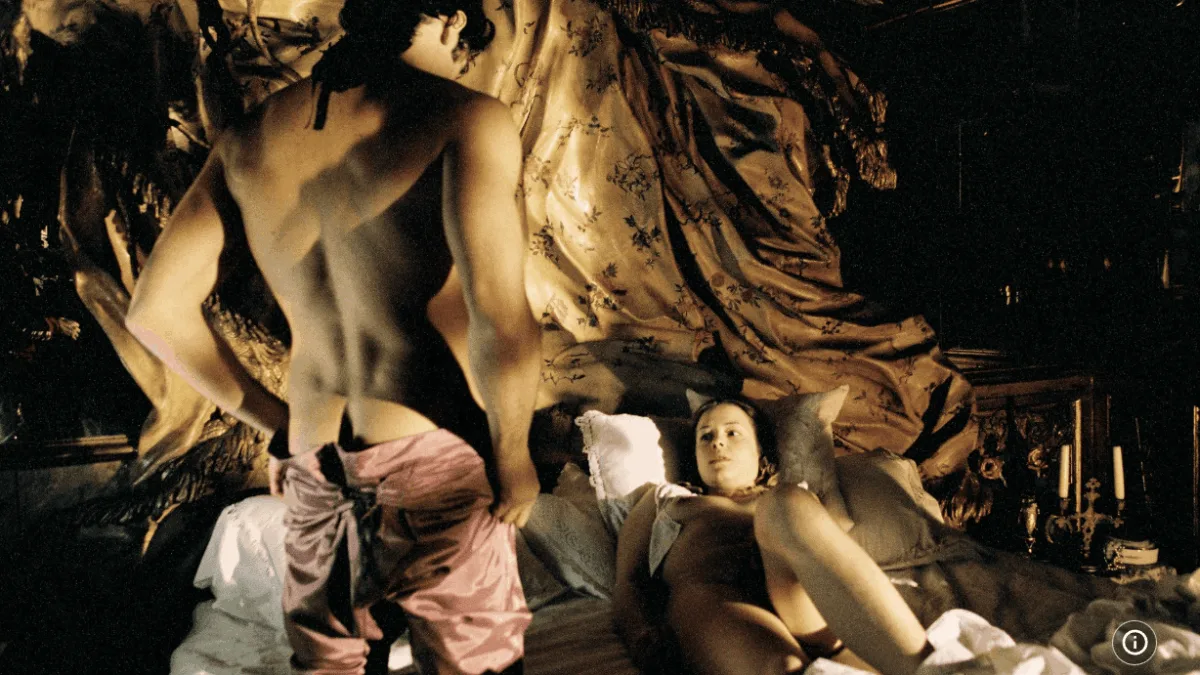
A virginal Eugénie enters a libertine’s boudoir for two days of philosophy, seduction and naked tuition—De Sade with the sharp edges sanded down.
Aurelio Grimaldi’s film begins with the Duke of Mistival handing his sheltered eighteen-year-old daughter Eugénie over to the beautiful, calculating Madame de Saint-Ange for a rather specialised education. Madame intends to free the girl from religion, modesty and every other rule likely to interfere with a good time, but she has another appetite to satisfy: the cynical Marquis de Dolmancé, a handsome libertine philosopher who normally prefers men. Her scheme brings Eugénie, Dolmancé, Madame’s brother De Mirvel and the well-equipped servant Augustin together inside a country residence where lectures on nature, morality and sexual freedom rapidly turn into practical demonstrations. Eugénie progresses from nervous curiosity to enthusiastic participation as bodies are inspected, inhibitions discarded and partners rearranged, while Madame...
manoeuvres everyone toward her own romantic and carnal objectives. Matters become nastier when Eugénie’s sanctimonious mother arrives to reclaim her, only to discover that the household has plans for her education too. Adapted mainly from the Marquis de Sade’s Philosophy in the Bedroom, with a dash of Dangerous Liaisons, the film wants to be an intelligent argument for pleasure without guilt. Unfortunately, its lofty speeches, stiff male performances and conspicuously simulated sex often make it feel like a costume-pageant version of erotic cinema. Grimaldi finds some attractive images and a lightly mischievous rhythm, but the promised depravity never develops real danger or fever. It is more soft-focus libertine primer than full-strength Sade: occasionally sexy, frequently awkward and sometimes funny for reasons the director surely did not intend.
Set in late-eighteenth-century France, the story belongs to the decadent twilight of the aristocracy, when powdered libertines could apparently spend an afternoon debating morality before removing everybody’s breeches. The production was shot around Genoa, using grand historic interiors and Villa Serra near Sant’Olcese to give its limited budget a respectable coat of gilt. Tall windows, painted rooms, antique furniture, rich costumes and a classical-flavoured score create a handsome, enclosed playground where nearly everything happens behind heavy doors. The vibe is languid, theatrical and voyeuristic rather than raw: a succession of boudoir tableaux bathed in warm, softened light, with philosophical chatter serving as foreplay between bouts of nudity. It looks more expensive than it behaves, though the polished surfaces can leave the whole affair oddly bloodless.
Sara Sartini makes Eugénie convincingly fresh-faced and increasingly uninhibited, even if her naïve delivery sometimes slips into amateur theatrics. Antonella Salvucci is the real attraction: voluptuous, knowingly predatory and completely relaxed while naked, she plays Madame de Saint-Ange as a woman who regards seduction as both sport and civic duty. The film offers abundant breasts, bottoms, lesbian teasing, oral-sex simulation and group coupling, but no unsimulated hardcore action. For all its talk of corruption and vice, it remains glossy softcore—generous with female flesh, coy about penetration and far less shocking than the dirty old Marquis would have demanded.









Sign in to comment
The same account you use to watch films.