

Portrait of a Lady on Fire (2019)
A Highly Aesthetic, Intense, Slow-Burn Film that Immerses you in the Stunning Beauty of Brittany island & the Gorgeously Aristocratic Noémie Merlant & Adèle Haenel.
A forbidden portrait becomes a two-hour seduction by glances, brushstrokes and bad timing—French romance served rare, smoky and quietly devastating.
In Brittany in 1770, Marianne, a young painter played by Noémie Merlant, arrives at an isolated estate to paint Héloïse, the aristocratic daughter of a countess. The finished portrait will be sent to Héloïse’s prospective husband in Milan, and if he likes the merchandise, so to speak, marriage follows. There is one snag: Héloïse refuses to pose because she wants no part of the arrangement. Marianne is therefore introduced as a walking companion and must study her subject in secret—her ears, hands, posture, expressions and the little movements of her mouth—then paint from memory at night. At first Héloïse is guarded, severe and clearly capable of marching straight off a cliff rather than submitting politely, but their daily walks begin to crack the ice. When Marianne finally confesses the deception and reveals her rather lifeless first...
attempt, Héloïse tears into it; Marianne destroys the canvas, and Héloïse unexpectedly agrees to sit for another. Now model and painter can look at each other openly, and looking becomes the film’s real form of foreplay. While Héloïse’s mother is away, the house briefly becomes a private female world shared with Sophie, the maid, whose unwanted pregnancy draws them into a quietly practical act of solidarity. They read the myth of Orpheus and Eurydice, debate why a lover would turn around despite knowing the cost, attend a nocturnal gathering of women around a bonfire, and slowly admit what has been burning between them. A first kiss leads to a tender affair, but the portrait is nearing completion and the countess will soon return. Céline Sciamma directs without melodramatic tricks or a syrupy score; she trusts faces, silence, wind, footsteps, fabric, charcoal and the crackle of fire. Claire Mathon’s camera makes nearly every frame feel composed without embalming the story in tasteful costume-drama starch. Some viewers may find the pace slow, and it certainly refuses to sprint, but the patience is the point: attraction develops through observation until painter and subject have studied each other so closely that neither can pretend neutrality. By the time love finally speaks plainly, the film has already reminded us that memory may be the only future these women are allowed.
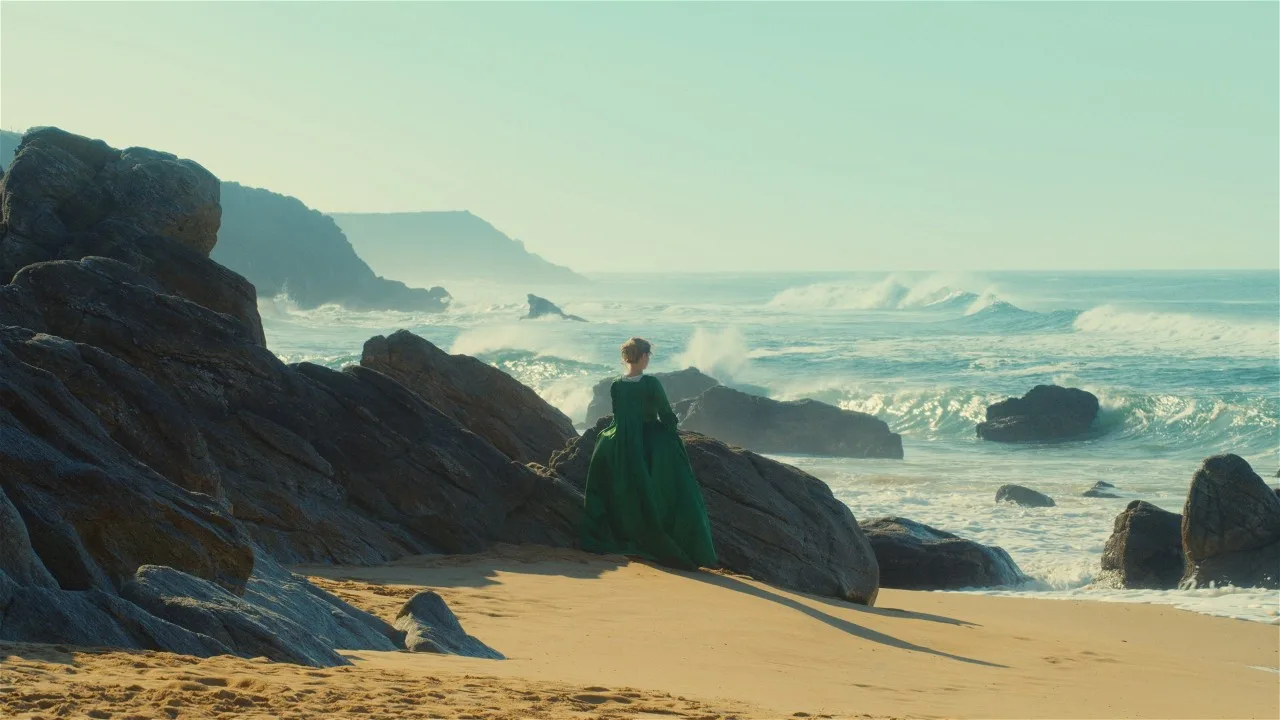
Although made in 2019, the story belongs to late-18th-century France, an era when wealthy women could be educated, cultured and intelligent yet still packaged into marriages negotiated elsewhere. The Breton island feels both liberating and imprisoning: Héloïse can race along the shore and breathe the sea air, but there is nowhere meaningful for her to run. The coastal exteriors were filmed around Saint-Pierre-Quiberon on Brittany’s Quiberon peninsula, with its hard blue water, pale beaches, sea arch and magnificent cliffs doing much of the emotional heavy lifting. Other Breton material was shot around Brech, while the château scenes used Château de La Chapelle-Gauthier in Seine-et-Marne, a weathered 17th-century building whose bare rooms and faded surfaces create an austere, almost haunted intimacy. The vibe is sensual rather than steamy, cerebral without becoming homework, and romantic without selling sentimental rubbish. Music is used sparingly, so when voices or instruments finally erupt, the effect hits like oxygen rushing into a sealed room. This is not a breezy date-night romp; it is a slow, hypnotic ache about desire, art and the terrible business of remembering something precisely because it could not last.
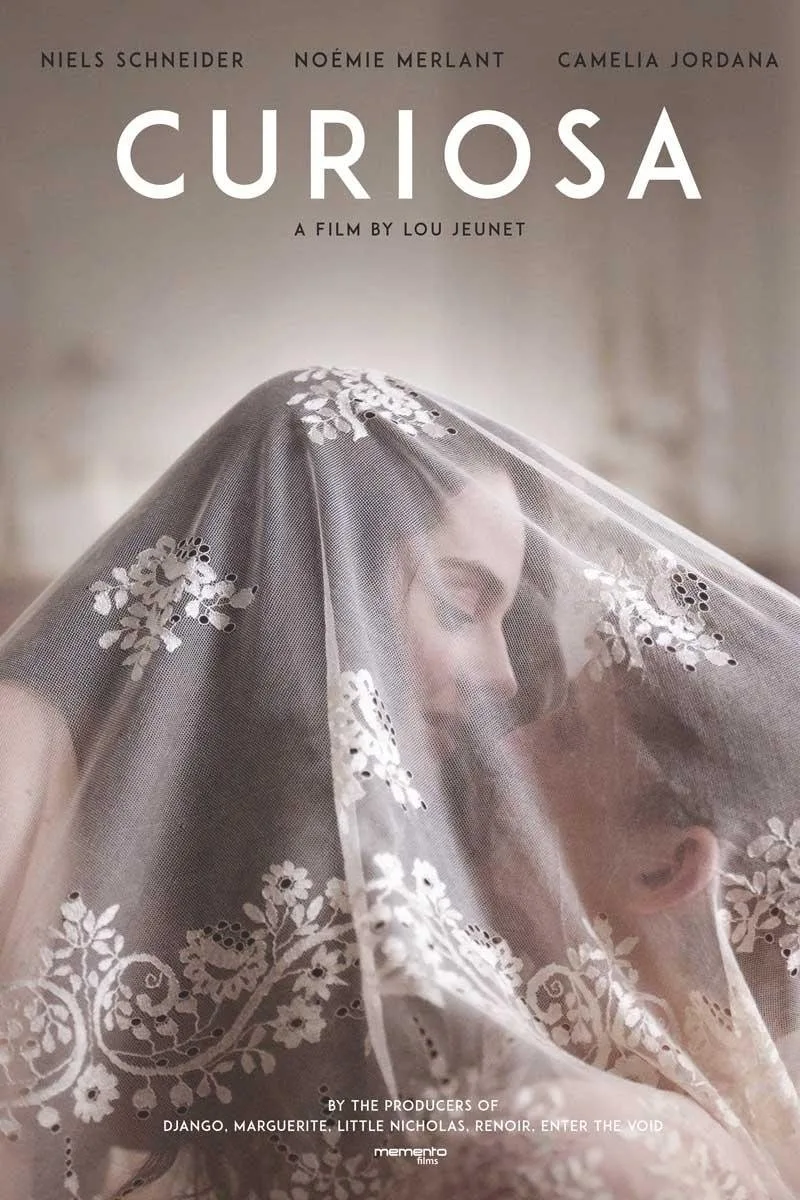
Merlant’s Marianne has dark-eyed poise, intelligence and a controlled sensuality that becomes increasingly difficult to keep buttoned up, while Adèle Haenel’s Héloïse is a knockout in a less polished, more dangerous way—blonde, statuesque, sharp-featured and capable of turning a sideways glance into an indecent proposal. Their chemistry is exceptional because neither woman is treated as decorative prey: each watches, challenges and desires the other, and the power keeps passing between them. Luàna Bajrami brings warmth and unforced dignity to Sophie, completing the film’s intimate female household. There is nudity, bare skin, kissing and lovemaking, but anyone expecting an explicit lesbian bonk-fest has wandered into the wrong château. The sex is frank yet restrained, photographed for closeness and mutual pleasure rather than cheap voyeurism. It is undeniably erotic, though—the sort of film where an exposed shoulder, a loosened dress or one woman breathing against another can generate more heat than ten minutes of energetic mattress gymnastics.
18th-century France, The Gorgeous Goddess Noémie Merlant is Marianne, a painter who travels across the sea to an isolated island in Brittany at the end of the eighteenth century to paint the wedding portrait of an Aristocratic lady Héloïse, played by another Stunning French actress Adèle Haenel, and it’s everybody’s guess what happens next…
Yes, they fall in Love, Make out and we get to watch!! 😍🔥🔥
Here’s a 12 minute juiced version with only the Juicy scenes of the 2 beautiful ladies,
And below is the Full Movie (Highly Recommended).












Sign in to comment
The same account you use to watch films.