

Siddhartha (1972)
Exotic Indian Temptress Simi Garewal in Shashi Kapoor’s adaptation of the Hermann Hesse spiritual masterpiece. Sensual, lush, nostalgic.
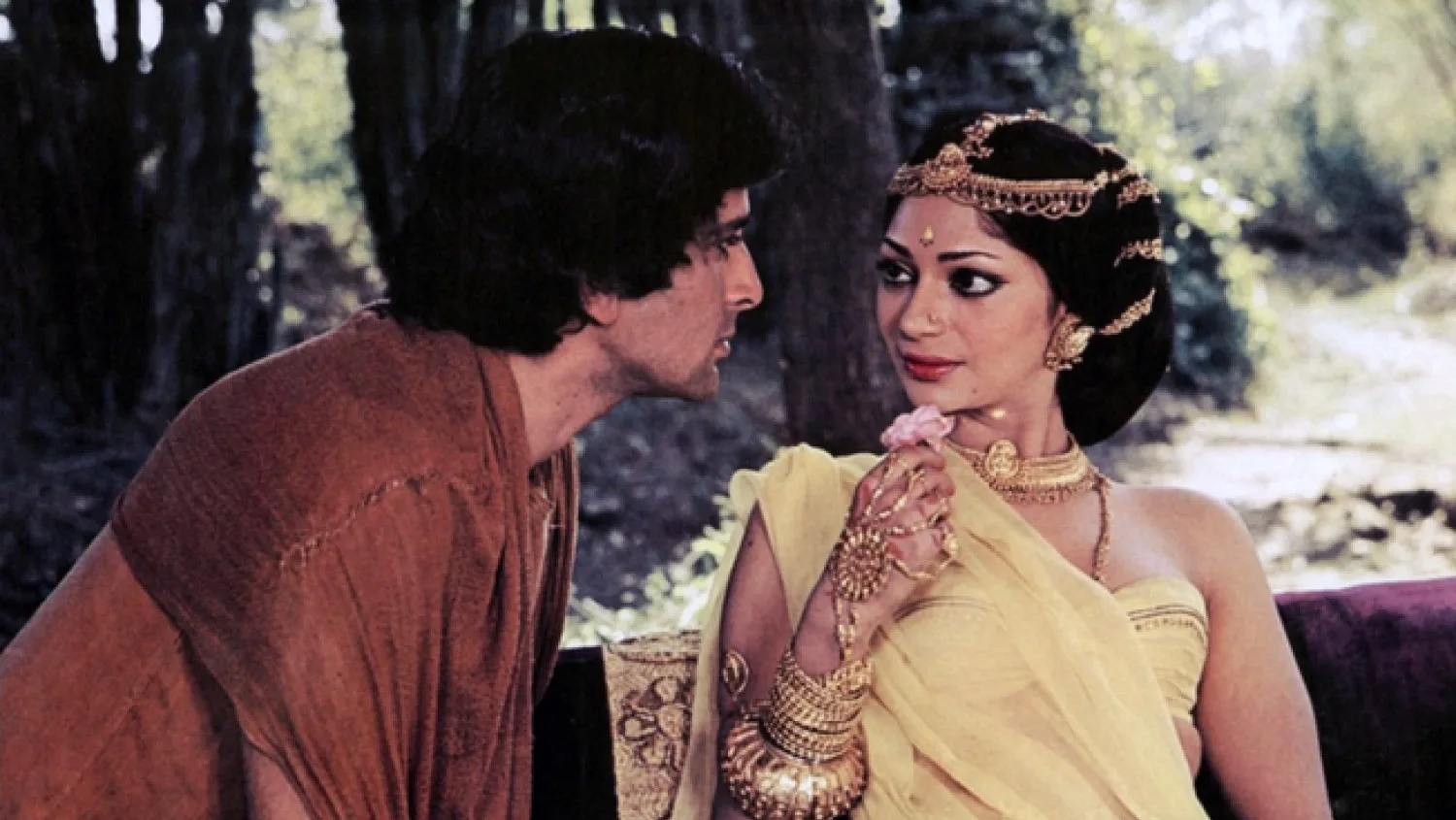
A Handsome Brahmin Rejects Priests, Holy Men and Buddha Himself, Then Finds His Hardest Lessons in a Beautiful Courtesan’s Bed, a Merchant’s Gold and the Voice of a River.
Siddhartha follows a privileged young Brahmin who has everything except peace of mind. Certain that inherited beliefs cannot give him the truth he wants, he leaves his family with his devoted friend Govinda and joins a band of wandering ascetics. Fasting, meditation and physical hardship teach him discipline, but they still feel like another way of escaping the self. Even an encounter with Gautama Buddha fails to settle him: Govinda accepts the great teacher, while Siddhartha decides that another man’s wisdom cannot replace experience. His journey then takes a wonderfully human turn when he meets Kamala, an elegant courtesan who tells this barefoot seeker that love has its own price and its own education. To become worthy of her attention, he enters the material world, working for the wealthy merchant Kamaswami...
and discovering a talent for business. Money, fine clothes, gambling, wine and Kamala’s bed gradually replace fasting and prayer. At first he treats wealth as a game, but the game slowly owns him, leaving him older, colder and disgusted with the man he has become. He abandons it all and returns to the river at his lowest point, where the ferryman Vasudeva teaches him to stop hunting for answers and simply listen. When his former life later returns in an unexpected and deeply personal form, Siddhartha must confront love, fatherhood and attachment—the very things no priest or philosophy could teach him. Conrad Rooks tells this life-spanning story in a compressed, sometimes narration-heavy style, and the philosophy can feel more stated than fully dramatized. Yet the film has a calm sincerity, and Sven Nykvist’s glowing photography gives its best moments a genuine spiritual pull. It is less a conventional drama than a visual meditation on the idea that a man must live through pride, pleasure, failure and grief before he can understand any of them.
Made during the early 1970s fascination with Eastern religion and personal awakening, the film has the unmistakable mood of an era when Western audiences were looking beyond churches, careers and consumer life for something deeper. It was filmed in northern India, including the holy city of Rishikesh and the palaces and estates around Bharatpur, and those locations are far more than decorative scenery. Rivers, forests, temples, courtyards and sunlit palace rooms mark the changing stages of Siddhartha’s inner life. The pace is unhurried, the colours are warm and earthy, and the Indian music strengthens the feeling that we are drifting through memory rather than watching a tightly plotted adventure. Some of the ageing makeup and solemn dialogue now look dated, but the film’s quiet confidence remains attractive. Its vibe moves naturally from youthful rebellion to ascetic severity, then into lush sensuality, moral decay and finally a simpler, more mature stillness beside the water.
Simi Garewal is the film’s great sensual presence as Kamala, and she plays her as a woman completely at ease with her beauty and her power over men. Slender, poised and luminous, with expressive eyes, delicate features and an almost aristocratic calm, she makes Kamala feel less like a common temptress than a sophisticated teacher who knows exactly what Siddhartha lacks. Their attraction is openly physical, and her lessons in kissing, touch and lovemaking bring warmth and erotic energy into a film that could otherwise have become dry and overly philosophical. Garewal’s nudity was daring for Indian cinema at the time, though modern viewers should not expect graphic sex. The love scenes are languid, intimate and tastefully staged, with brief nudity and plenty of bare skin, but no explicit intercourse. What makes them memorable is not raw exposure so much as Garewal’s graceful femininity and the contrast between her soft, knowing sensuality and Siddhartha’s proud innocence. She looks gorgeous throughout, but she also gives Kamala intelligence, wit and emotional dignity, ensuring that she is not merely another pleasure he samples on the road to enlightenment.
Siddhartha is the story of a young Brahmin and his search for a meaningful way of life. His journey takes him through periods of harsh asceticism, sensual pleasures, material wealth, self-revulsion and eventually to the oneness and harmony that he had been seeking. The story is based on the best-selling novel by German Nobel Prize winner Hermann Hesse.
This Juiced version captures the turn in Siddhartha’s life when he seeks to learn the pleasures of the flesh from a courtesan, the Gorgeous Simi Garewal.





















Sign in to comment
The same account you use to watch films.