

Aphrodite (1982)
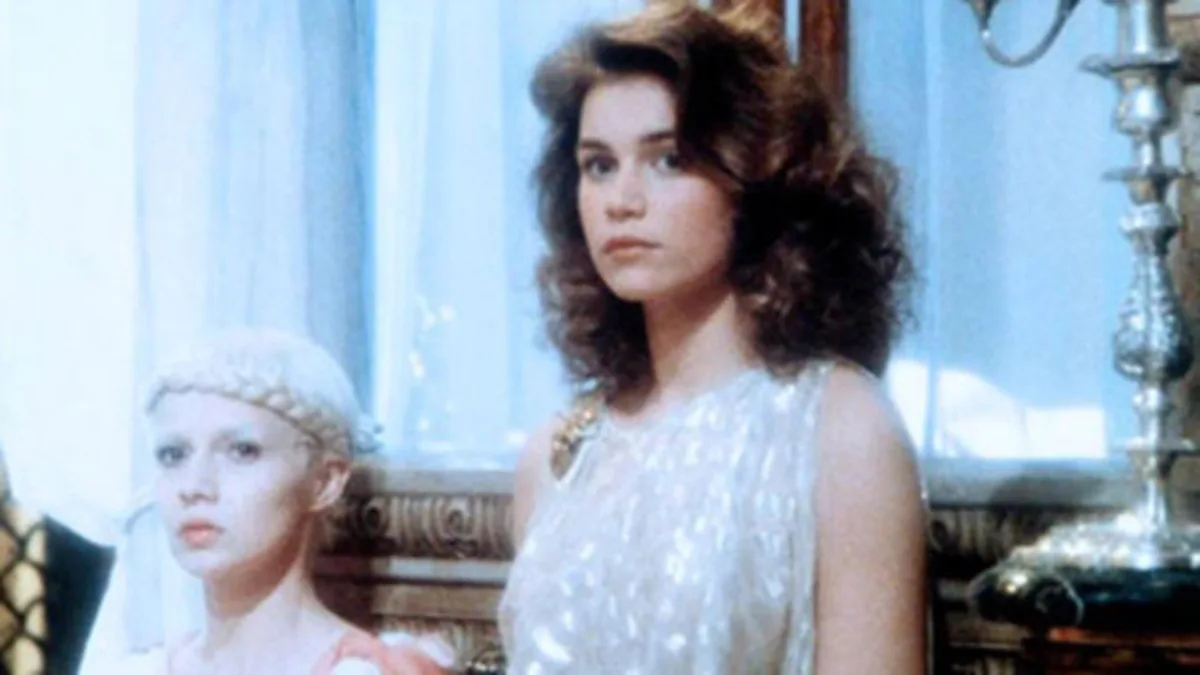
A gun-running millionaire stages a three-day pagan sex party on a Greek island, only to learn that Aphrodite brings jealousy, espionage and one hell of a hangover.
Set in the uneasy summer of 1914, Aphrodite follows Harry Laird, a rich English arms dealer who sails into the Mediterranean with his mistress Valérie and a fashionable collection of friends. Their destination is the secluded island estate of Harry’s old companion, Baron Orloff, where ordinary holiday manners are promptly tossed overboard. Harry announces that the guests will spend three days and nights acting out a celebration inspired by Pierre Louÿs’ erotic novel, changing from elegant Edwardian clothes into skimpy classical costumes and surrendering themselves to wine, voyeurism, partner-swapping and carefully staged pagan rituals. The centrepiece of Harry’s private fantasy is Pauline, Orloff’s beautiful but guarded young ward, whom he pressures into embodying Aphrodite. Yet Harry has not arranged this expensive...
bacchanal merely to admire her naked body. He also intends to use Pauline’s innocence to gain access to secret military papers hidden in the Baron’s study. As the ceremonies become increasingly intimate, Harry’s calculated seduction starts turning into genuine possessiveness, while Pauline proves less easily controlled than his arrogant little scheme assumes. Around them, the other guests enthusiastically disappear into bedrooms, gardens and soft-focus orgies, barely noticing that Europe is drifting towards catastrophe. Director Robert Fuest treats the whole affair as a decadent dream rather than a tightly wound thriller: bodies recline among statues, silk dresses fall away, classical music swells and political intrigue wanders through the villa almost apologetically. The espionage plot is thin, the dialogue can be terribly self-important and the pace sometimes moves like a sunbather after three bottles of wine. Still, there is something oddly haunting beneath the softcore spectacle. These privileged people are celebrating pleasure at the end of an era, pretending that sex, money and costume games can keep the modern world outside the gates. The film never fully balances romance, decadence and suspense, but its atmosphere lingers—a lavish private party where everyone is playing at antiquity while history quietly sharpens its knife.
Although the story takes place on a Greek island just before the First World War, much of its Mediterranean splendour was created on the French Riviera, including Villa Cypris at Roquebrune-Cap-Martin. With its terraces, gardens, sea views, marble figures and period finery, the setting sells the fantasy beautifully. The vibe is part Edwardian house party, part David Hamilton haze and part bargain-basement Caligula: languid, kitschy, sensuous and faintly doomed.
Valérie Kaprisky is the obvious reason to watch. As Pauline, she combines youthful reserve with a cool, teasing sensuality that makes Harry’s obsession believable even when the script is wobbling. Fuest’s camera is plainly in love with her face and body, and she appears in extensive frontal and rear nudity without losing Pauline’s aloofness. Catherine Jourdan, Delia Boccardo and the ever-elegant Capucine add further varieties of mature glamour, temptation and sexual mischief. The standard version sits firmly at the bolder end of softcore, offering prolonged nudity, simulated lovemaking, lesbian play, voyeurism and group-sex tableaux. It is explicit enough to keep the toga party lively, though more dreamy than dirty and more interested in arranging beautiful flesh than generating genuine heat.













Sign in to comment
The same account you use to watch films.