

Fascination (1979)
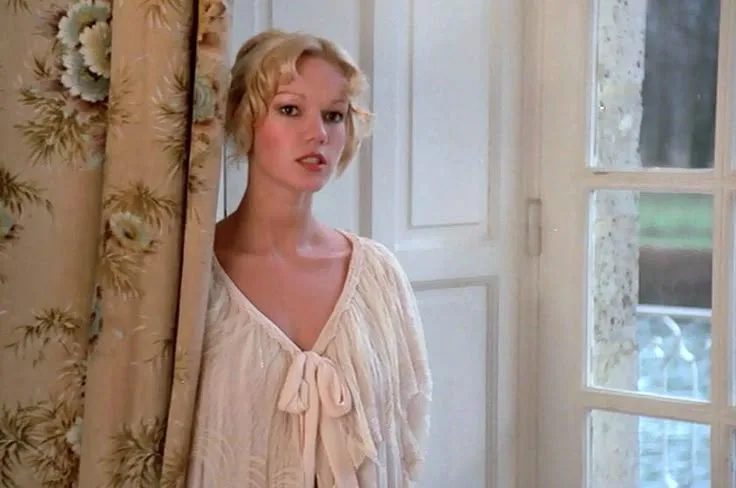
A double-crossing thief finds gold, a lonely château and two gorgeous women—then learns that being the only man in the house is not always the winning hand.
Set in 1905, Jean Rollin’s erotic Gothic daydream begins with fashionable Parisian women drinking fresh ox blood as a supposed cure for anaemia—an image at once refined, repulsive and strangely sexy. Elsewhere, Marc, the smug young leader of a gang of thieves, steals the gang’s gold and bolts for the countryside with his former partners on his heels. He reaches an isolated château occupied by Elisabeth and Eva, two beautiful lovers who are supposedly waiting for their mistress, the Marchioness, to return. Marc pulls a gun, takes control of the house and assumes the ladies are helpless ornaments. They are frightened for roughly five minutes. After that, they begin escaping rooms, disarming him, teasing him and turning his hostage situation into an erotic game whose rules he does not understand. Eva seduces him while Elisabeth...
watches with a mixture of jealousy and private amusement, and Marc becomes so pleased with his masculine conquest that he fails to notice who is really being handled. When his criminal companions surround the château, the story briefly shifts into gangster territory. Eva goes out with the gold, is threatened and assaulted, then answers with a knife and a very large scythe, creating the film’s most famous image: Brigitte Lahaie stalking across the bridge in a black cloak, looking like Death’s indecently attractive younger sister. Once the gang is dealt with, Marc could leave, yet fascination has already done its work. He stays as night falls and the Marchioness arrives with a gathering of elegantly dressed women whose interest in blood is more than medicinal. From there, the sexual play grows colder, the women’s intentions become clearer and Marc gradually changes from armed intruder to increasingly nervous guest.
Rollin is not terribly interested in tidy plotting, natural dialogue or brisk pacing; scenes drift, characters behave as if hypnotised and portions of the film feel closer to a feverish stage play than conventional horror. Yet that awkward dream logic is also its charm. The mist, music, autumn colours, long silences and sudden violence create a mood that gets under the skin. It is less a vampire film than a blood-soaked fantasy about arrogance, appetite and a man discovering far too late that beauty can smile at you while deciding exactly how it intends to use you.
Although made in the late 1970s, the story belongs to the decadent Europe of 1905: fading aristocracy, tailored dresses, stolen gold and respectable ladies pursuing distinctly disreputable pleasures. Most of the action unfolds in and around a real château—its bare rooms, stables, moat, narrow bridge and wintry grounds giving the low-budget production far more atmosphere than money could have bought. The vibe is slow, foggy and deliberately unreal, like stumbling into an old erotic painting where everyone has been waiting for darkness and nobody plans to explain why.
Franca Maï gives Elisabeth a pale, watchful allure, playing her less as a helpless captive than a quietly possessive woman enjoying a private joke. Brigitte Lahaie is the film’s knockout attraction: statuesque, cool and gloriously feminine, equally convincing lounging half-dressed by the fire or swinging a scythe in a cape. Her Eva moves from playful sensuality to lethal confidence without losing that teasing little smile. The film contains generous nudity, lesbian caressing and several simulated sex scenes, but it remains softcore rather than hardcore; Rollin is chasing erotic menace, not anatomical instruction. The women are unquestionably presented for the male gaze, and thank heaven for small French mercies, but their beauty is never merely decorative—they own the château, the mood and, before long, every man foolish enough to enter.


Sign in to comment
The same account you use to watch films.