

The Canterbury Tales (1972)
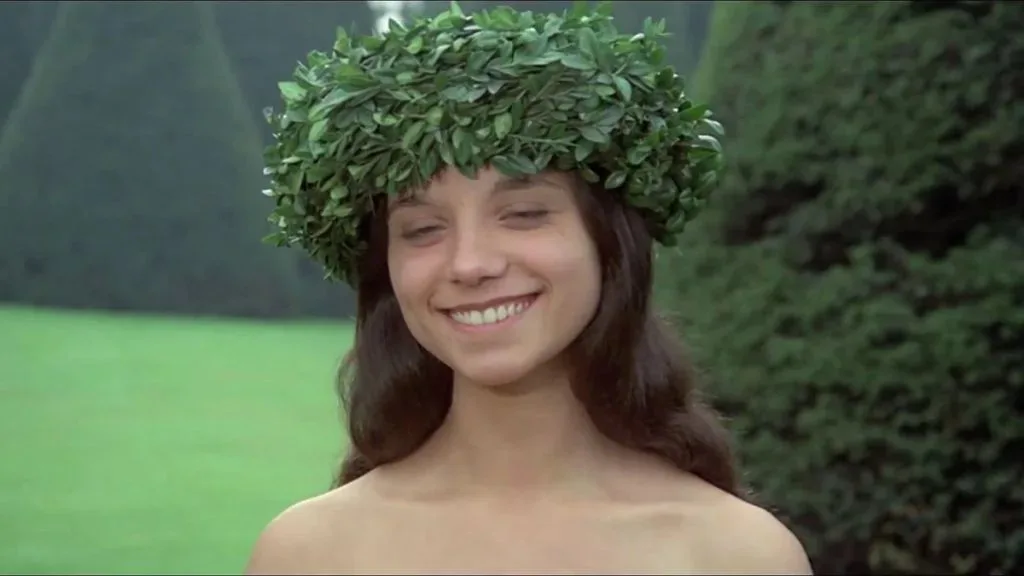
Chaucer gets the Pasolini treatment: muddy pilgrims, horny wives, foolish husbands, crooked clergy and enough naked mischief to make an English teacher choke on his tea.
Pier Paolo Pasolini plays Chaucer himself, quietly observing the pilgrims travelling from London to Canterbury and turning their appetites, lies and disasters into eight loosely linked tales. This is no polite illustrated classic. It opens with wealthy, ageing Sir January buying himself a beautiful young bride, May, only to discover that money cannot manufacture desire; while he paws at her with the confidence of a king, her attention drifts toward a handsome young lover and an increasingly daring garden rendezvous.
From there, Pasolini jumps without ceremony between lusty farce and genuine cruelty. A corrupt inquisitor hunts men for profit, accepting payment from the rich while allowing the poor to suffer, unaware that a watchful stranger may be even more dangerous than he is. Ninetto Davoli then arrives as...
Perkin, an irrepressible Chaplinesque rogue who chases women, attempts honest employment and leaves Oxford in cheerful chaos. In another tale, young Nicholas seduces Alison, the neglected wife of a carpenter, and invents a prophecy about a second biblical flood so the husband will suspend tubs from the ceiling while the lovers enjoy themselves below. The Wife of Bath acquires a much younger student husband and discovers that keeping a pretty young man is rather harder than catching one. Two Cambridge scholars, cheated by a crooked miller, repay him during a night of bed-hopping confusion involving his wife and daughter. The humour gradually darkens when three drunken young brutes go looking for Death and stumble upon a temptation that turns their friendship poisonous. Finally, a greedy friar receives a guided glimpse of the punishment awaiting hypocritical churchmen. The episodes vary wildly—some are hilarious, some deliberately ugly and some feel like sketches from a medieval fever dream—but Pasolini’s point remains clear: beneath fine robes, religious authority and respectable marriage, people are driven by sex, hunger, money and fear. He treats the body without shame and bad taste without apology, producing an earthy comedy that can make you laugh at a fart one minute and recoil from institutional brutality the next.
The setting is late-14th-century England, recreated in weathered streets, barns, churches and courtyards across Canterbury, Cambridge, Bath, Battle Abbey, Lavenham, Wells and the English countryside, with interiors filmed in Rome and Mount Etna used for the infernal material. Pale daylight, rain, mud, rough faces and heavy costumes give it the vibe of a filthy village carnival where everyone has been drinking since breakfast. It is less dreamy and sensual than Pasolini’s Mediterranean work: colder, browner, more grotesque and unmistakably English in its damp, stubborn earthiness.
There is no single female lead, but the women provide much of the film’s sexual spark. Josephine Chaplin makes May youthful, delicately pretty and slyly alert, her apparent obedience hiding a healthy appetite of her own. Jenny Runacre is a wonderfully ripe and playful Alison, giving the carpenter’s tale its warmest erotic charge, while Laura Betti attacks the Wife of Bath with loud, lusty comic force rather than conventional glamour. Pasolini photographs them as flesh-and-blood medieval women, not polished pin-ups: feminine, mischievous, calculating and openly desirous. The film contains abundant male and female nudity, full-frontal exposure and strongly simulated sex, presented with cheeky frankness rather than soft-focus romance. It is explicit, bawdy and sometimes deliberately grubby—but never remotely coy.







Sign in to comment
The same account you use to watch films.