

The Man-Eater (1999)
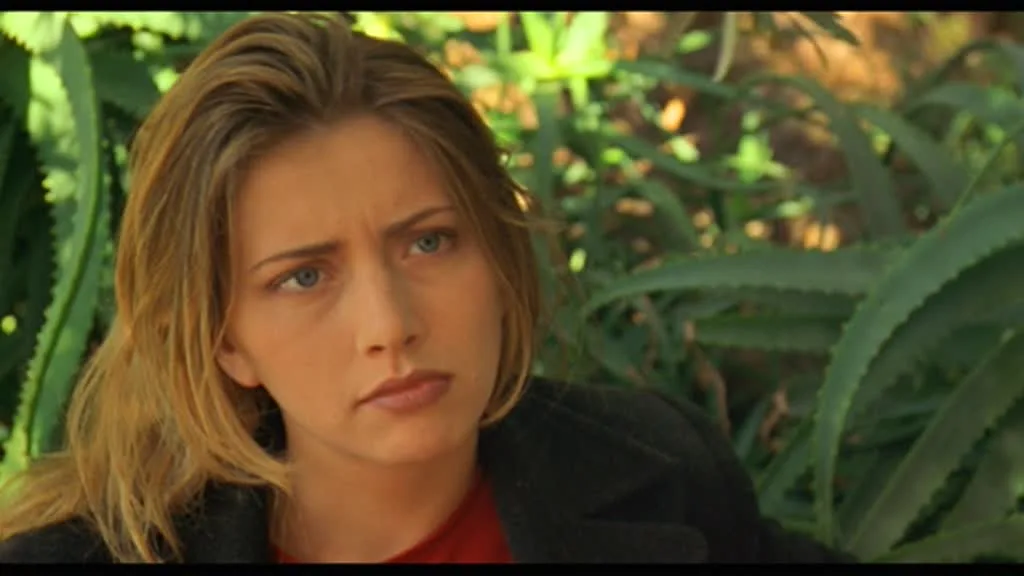
By day Giulia helps the elderly; by night she changes names, collects men and keeps love outside—until a lovestruck young student refuses to disappear.
Giulia is a respectable social worker in Sicily, but that daytime identity is only one face of a woman who refuses to be pinned down. At night she becomes Viviana, Alessandra or whoever suits the moment, cruising for men and taking her pleasure without promises, apologies or sentimental complications. Businessmen, students, soldiers and casual lovers enter her orbit, enjoy the sex and are expected to vanish afterward. Then she picks up Valerio, a shy literature student, takes him to a stylish house by the sea and gives him a night he cannot forget—followed by a false telephone number. For Giulia it is another conquest; for Valerio it becomes an obsession. While she continues hunting and slipping between identities, he searches for the mysterious woman who has invaded his dreams, imagining her stripping and seducing him all over...
again. His awkward sincerity begins to unsettle her carefully controlled life. What starts as a parade of explicit encounters gradually becomes a strange, fractured contest between female appetite and male devotion, asking whether a woman who treats sex as pure freedom can make room for a man who wants more than her body.
Aurelio Grimaldi shoots the film as a chilly piece of erotic art cinema rather than a warm romance. Polished coastal images, black-and-white fantasy, confessional video inserts and abrupt changes of format make Giulia feel deliberately unknowable. The sex is central and confrontational, but the loose editing and thin character development sometimes leave the drama looking like disconnected episodes. Maria Soldatini’s music brings welcome atmosphere to a film that can otherwise feel emotionally distant.
Made at the end of the 1990s, the film belongs to that brief European moment when directors were pushing unsimulated sex into serious theatrical cinema and daring audiences to decide where art ended and pornography began. Its Sicilian setting, particularly the atmosphere of Cefalù and the coast, gives it sunlit villas, swimming pools, old streets and warm Mediterranean nights, yet the mood remains cool, lonely and oddly clinical. It is less a carefree sex comedy than a low-budget, Pasolini-influenced portrait of desire, bourgeois respectability and the isolation hiding beneath promiscuity.
Loredana Cannata carries the picture with a bold face, a sinuous figure and the fearless physical confidence the role demands. Her acting can be elusive because Giulia is written more as an erotic mystery than a fully rounded woman, but Cannata has enough sensual authority to hold the eye through long stretches of nudity, seduction and sexual display. The opening striptease is especially striking, and the pool encounter has a languid, predatory charge. This is far beyond ordinary softcore: Cannata performs an unsimulated fellatio scene, prolonged masturbation and real cunnilingus, alongside numerous graphic couplings. The film may be dramatically ragged, but there is nothing timid about its leading lady—she gives herself to the camera with startling nerve and makes Giulia’s hungry, unapologetic femininity the main event.














Sign in to comment
The same account you use to watch films.