

Renoir (2012)
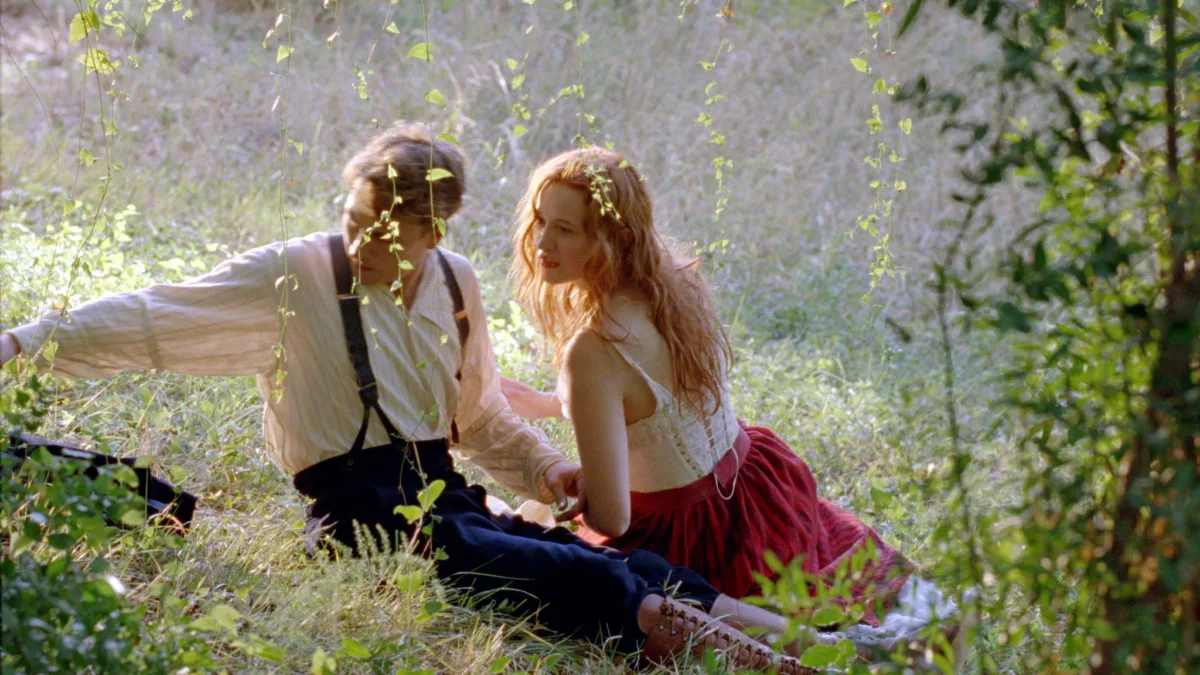
An ageing painter, his wounded son and a flame-haired muse find beauty, desire and a new artistic future under the warm sun of wartime Provence.
In 1915, Pierre-Auguste Renoir is living out his final years at his estate near Cagnes-sur-Mer. His wife is dead, his legs are failing and rheumatoid arthritis has twisted his hands so badly that a brush must be placed between his fingers. Yet the stubborn old master continues to paint, surrounded by female servants who carry, wash and fuss over him. Into this strange household walks Andrée Heuschling, a redheaded young beauty determined to become his new model rather than another domestic girl. Her confidence irritates the women, but her body, energy and natural sensuality immediately revive Renoir’s appetite for work. She poses nude beneath the trees and in his studio while he studies the way sunlight falls across her skin. Then Jean Renoir returns from the Great War with a badly injured leg and no clear idea what to do with his life....
Quiet, dutiful and still shaken by combat, Jean is drawn to Andrée’s boldness, and she wastes little time challenging his passivity. Their attraction becomes a clandestine affair of outdoor meetings, shared beds and conversations about cinema. Andrée wants more than life as an artist’s model; she dreams of becoming an actress and awakens Jean’s own interest in moving pictures. As their romance deepens, Jean begins to imagine an artistic future with her, yet he remains troubled by the war and the men still fighting in his place. His growing determination to return to military service brings him into sharp conflict with his father, who cannot understand why a wounded son would willingly go back. What follows is less a conventional love triangle than a quiet struggle between age and youth, painting and cinema, the pleasures of the flesh and the obligations of a brutal world waiting beyond the garden.
Gilles Bourdos turns the film into a series of warm, living canvases, with Mark Lee Ping-Bing’s camera bathing skin, leaves and fabric in soft Mediterranean light. The nudity is candid but painterly, showing why the female form remains central to Renoir’s work rather than using it merely as decoration. Alexandre Desplat’s restrained music suits the reflective mood, while Michel Bouquet gives the painter a formidable, irritable dignity. The pace is very slow and the drama occasionally feels thin, but the visual beauty is undeniable.
The story belongs to a France caught between two ages: the old bourgeois world of servants, country estates and established masters, and the modern century of mechanised war, independent women and cinema. Filmed largely at Domaine du Rayol in the Var, where the Renoir home was recreated, it carries the lazy, sun-drenched atmosphere of the Côte d’Azur. Birds sing, women bathe and lunches unfold beneath the trees, while wounded soldiers remind us that slaughter is taking place only a few hundred miles away. That contrast gives the film its dreamy but faintly melancholy soul.
Christa Théret makes Andrée impossible to ignore. With her pale skin, red hair, full figure and direct, insolent gaze, she has exactly the ripe, earthy femininity needed to step into a Renoir canvas. She plays her as a spirited young woman who understands the power of her beauty but refuses to remain a silent ornament; she wants attention, pleasure and a career of her own. Théret spends a considerable amount of screen time posing topless or completely nude, including clear full-frontal views, though the presentation remains sensual rather than pornographic. The actual lovemaking is brief and mostly implied. This is not an explicit sex film, but it is unapologetically fascinated by the naked female body—and Théret’s luminous presence is the main reason its slow, languid images stay in the mind.








Sign in to comment
The same account you use to watch films.