

Claire of the Moon (1992)
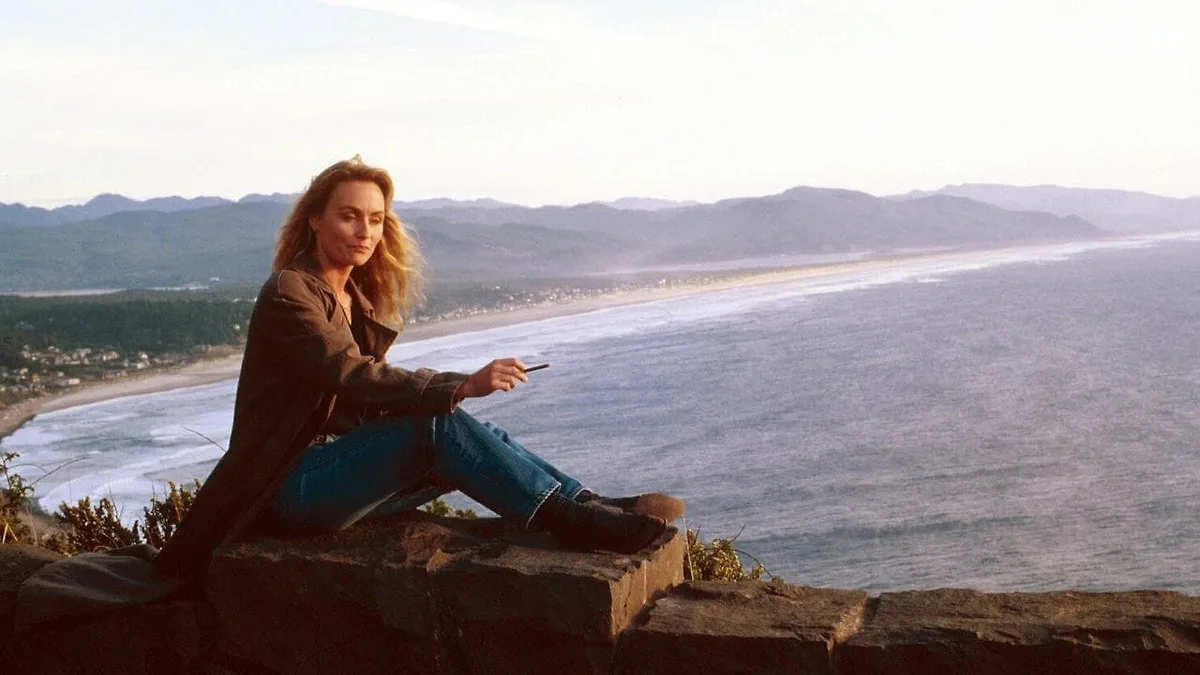
A smoky, slow-burn erotic drama in which a promiscuous blonde writer meets the one person she cannot seduce, dismiss or easily understand.
Claire Jabrowski is a successful Los Angeles satirist nursing writer’s block and the remains of a failed relationship when she drives north to an all-women writers’ retreat on the Oregon coast. Claire is clever, untidy, fond of French cigarettes, tequila and casual sex with men; her cabin mate, Dr. Noel Benedict, is a controlled, disciplined psychiatrist whose writing examines sex and intimacy. They dislike each other on sight. Noel regards Claire as a reckless slut hiding behind jokes and one-night stands, while Claire enjoys needling this severe woman who seems determined to analyse everyone except herself. Their arguments continue through group discussions, nights at the local bar and the retreat’s boozy social life, but Claire begins looking at Noel differently after the doctor openly declares that she is a lesbian. Disagreement turns into...
fascination. A drink offered as a truce leads to longer conversations, a teasing backgammon match and an exchange of sexual fantasies that leaves both women more aroused and exposed than either intended. Claire dreams about kissing Noel, returns to a male lover as if trying to prove something to herself, then grows increasingly unable to ignore the charged silence inside their cabin. Noel wants her too, but refuses to become a straight woman’s holiday experiment. At a drunken dance party their bodies finally come together, only for the moment to be interrupted; later, Claire bluntly suggests sex and is rejected. From there the film becomes a battle between Claire’s desire and denial, and between Noel’s hunger for intimacy and fear of being used. It is very talky, sometimes painfully earnest and far slower than it needs to be, yet the friction between these two stubborn women gives it the feeling of extended foreplay.
Nicole Conn builds her debut around contrasts: cigarette smoke and sea air, loose sensuality and buttoned-up restraint, long philosophical arguments and sudden flashes of erotic fantasy. Randolph Sellars’ photography finds beauty in beaches, driftwood, sunsets and bodies held just short of contact, while the piano-led score pushes the romance hard. Some supporting performances are broad and the dialogue can sound written rather than spoken, but the central sexual tension survives the film’s stiffness.
Made at the dawn of the 1990s independent queer-film wave, the picture carries the period openly in its clothes, hair, politics and serious debates about identity. It was filmed around Portland and the Oregon coast, whose grey skies, rugged beaches and secluded cabins create a moody refuge from ordinary life. The vibe is part intellectual retreat, part seaside romance and part soft-focus adult melodrama: cigarettes, alcohol, arguments, longing looks and miles of patient yearning.
Trisha Todd is the film’s main visual temptation: a tall, statuesque blonde with long legs, fitted jeans, a striking profile and the relaxed confidence of a woman accustomed to turning heads. Her Claire smokes, lounges and prowls through the retreat with provocative feminine swagger, yet Todd also lets doubt creep beneath that sexually fearless surface. Karen Trumbo offers the opposite appeal as Noel—short-haired, elegant, guarded and quietly commanding, with desire showing through every attempt at professional control. Their acting is uneven in the heavier speeches, but their physical chemistry is unmistakable. The film includes frank sexual discussion, topless nudity, steamy heterosexual scenes and an extended lesbian encounter filmed in a polished softcore style; it is sensual and explicit by mainstream early-1990s standards, though the long wait is considerably hotter than some of the payoff.









Sign in to comment
The same account you use to watch films.