

Four Lovers (2010)
Mutual attraction leads two married french couple friends to swap partners sexually. Everything is Beautiful for a while, until one of the women finds out something.
Two happy marriages, four restless adults and one dangerously simple idea: swap partners, tell no lies and hope jealousy has the weekend off.
Rachel designs jewellery and seems perfectly content with Franck, while tattooed web designer Vincent has built an equally settled life with Teri, a former gymnast. Then Rachel and Vincent meet at work, trade a little brutally honest banter and spark at once. A dinner brings both couples together; before anyone has time to invent excuses, Franck and Teri kiss, Rachel and Vincent follow suit, and all four decide that secrecy between themselves would be more poisonous than the sex. So begins their private republic of shared beds, borrowed clothes, exchanged books and increasingly blurred identities. Rachel discovers a rougher, more combustible side of herself with Vincent, while Franck and Teri find something softer and more tender. For a while the arrangement is exhilarating: nobody is officially cheating, the marriages remain intact and each...
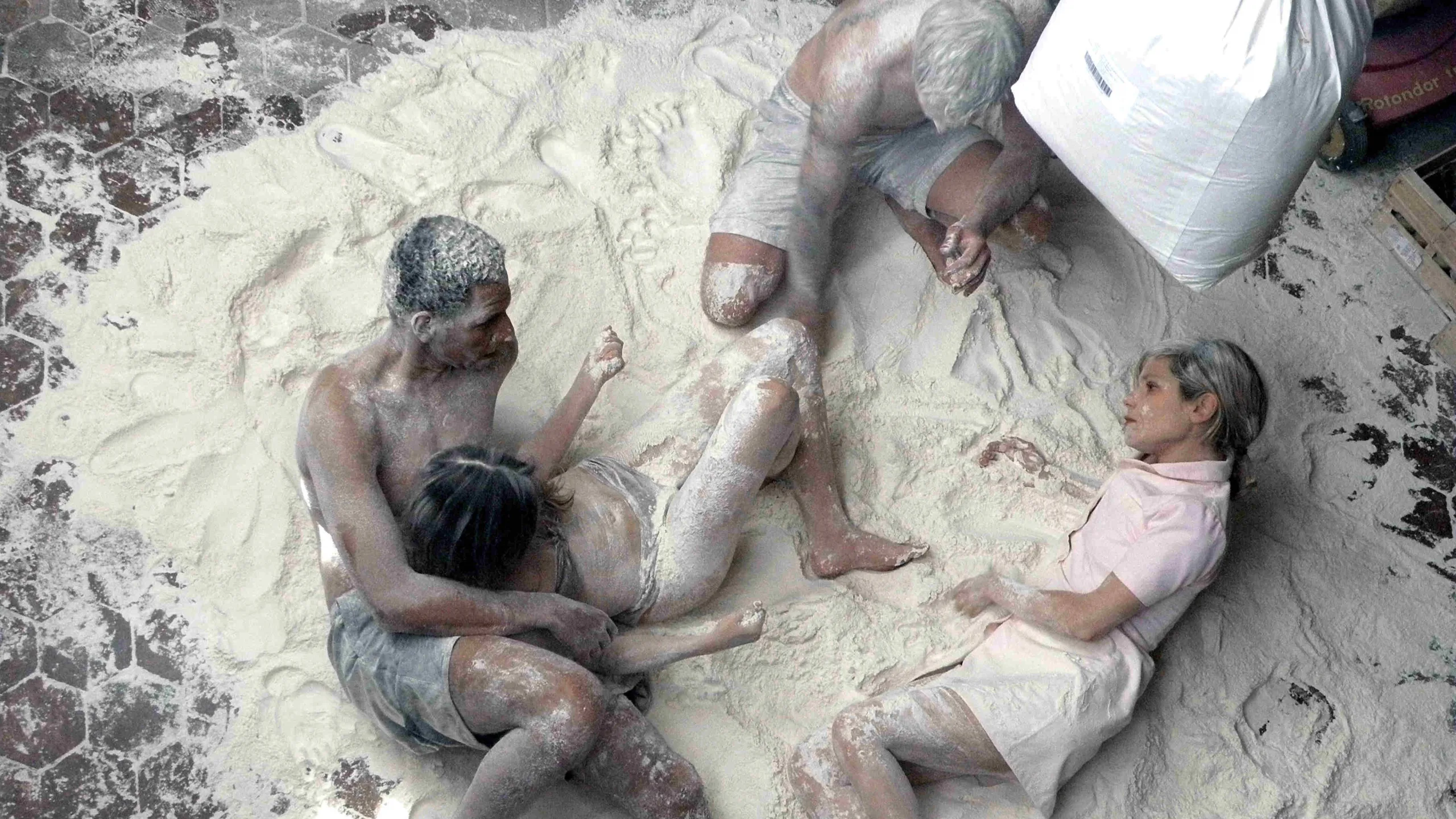
new lover appears to recharge the old relationship. Antony Cordier wisely avoids treating them as suburban swingers collecting orgasms like loyalty points. They are ordinary adults trying to discover whether desire can be enjoyed without ownership and whether complete honesty can protect everyone from pain. Naturally, the emotional arithmetic soon stops adding up. One affair deepens differently from the other, curiosity becomes comparison, and the women’s own intimate encounter scrambles the pattern further. The lovers start asking cruel questions they were too busy undressing to consider: Who is more desired? Who is replaceable? What happens when freedom begins to feel like abandonment? Their children and parents remain outside the secret, pressing everyday family life against this fragile erotic utopia. The famous country-house sequence, with four naked bodies rolling through spilled flour, is either gloriously sensual or faintly ridiculous depending on your tolerance for French art-house symbolism, but it marks the peak of their fantasy—a moment when jealousy, marriage and separate identities seem to dissolve. After that, longing and possessiveness creep in, and the film becomes less a celebration of partner-swapping than a melancholy study of people discovering that bodies may be shared more easily than hearts. Cordier’s direction is fluid, physical and deliberately light on explanations; at times the characters could use more psychological meat, but the committed performances make their confusion feel bruisingly real.
This is very much a film of affluent, urban France circa 2010: designer jewellery, tattoos, feng shui, creative professions, smartphones and educated thirty- and forty-somethings convinced they can redesign monogamy as casually as rearranging the furniture. Shot in Montreuil in Seine-Saint-Denis, it mixes apartments and workplaces with a bucolic country escape where old stone, open water, summer greenery and that flour-covered pantry give the quartet room to indulge their dream of living outside bourgeois rules. The vibe begins playful, modern and conspiratorial, with the thrill of clever adults getting away with something delicious, then gradually turns uneasy and wistful. This is not a glossy wife-swapping romp or a mechanical parade of bedroom gymnastics. It is sensual French relationship cinema: warm skin, awkward silences, sudden laughter, bruised egos and the queasy realization that being sexually liberated does not make anyone emotionally bulletproof.
Marina Foïs makes Rachel wiry, sharp and hungry, with an unconventional beauty that grows sexier as her composure cracks; her desire has teeth, especially opposite Nicolas Duvauchelle’s tattooed, volatile Vincent. Élodie Bouchez is the softer bombshell—athletic, supple and naturally erotic, playing Teri with an open face and a body-language confidence that makes every touch register. Both actresses commit fully, including nudity, frank simulated sex and a tenderly charged scene together. The film is explicit by respectable art-house standards, with plenty of bare flesh and prolonged lovemaking, but it never becomes pornography. Its real obscenity is emotional: watching four attractive adults insist they can fuck freely, love generously and never demand to be someone’s favourite.
Mutual attraction leads two married french couples, who are also good friends, to swap partners sexually. Everything is Beautiful for a while, until one of the women finds out that her husband and the other woman had already slept before their mutual arrangement began.
And then the human emotions of Jealousy & Betrayal creep in… destroying what was and could have been a wholesome enhancement to their friendship and relationships.
Humans can fuck up anything!!


Sign in to comment
The same account you use to watch films.