

Emmanuelle (1974)
The Just Jeakin Classic starring the Ravishing Sylvia Kristel. A french woman in an open marriage with a french embassy diplomat in Bangkok has some adventures.
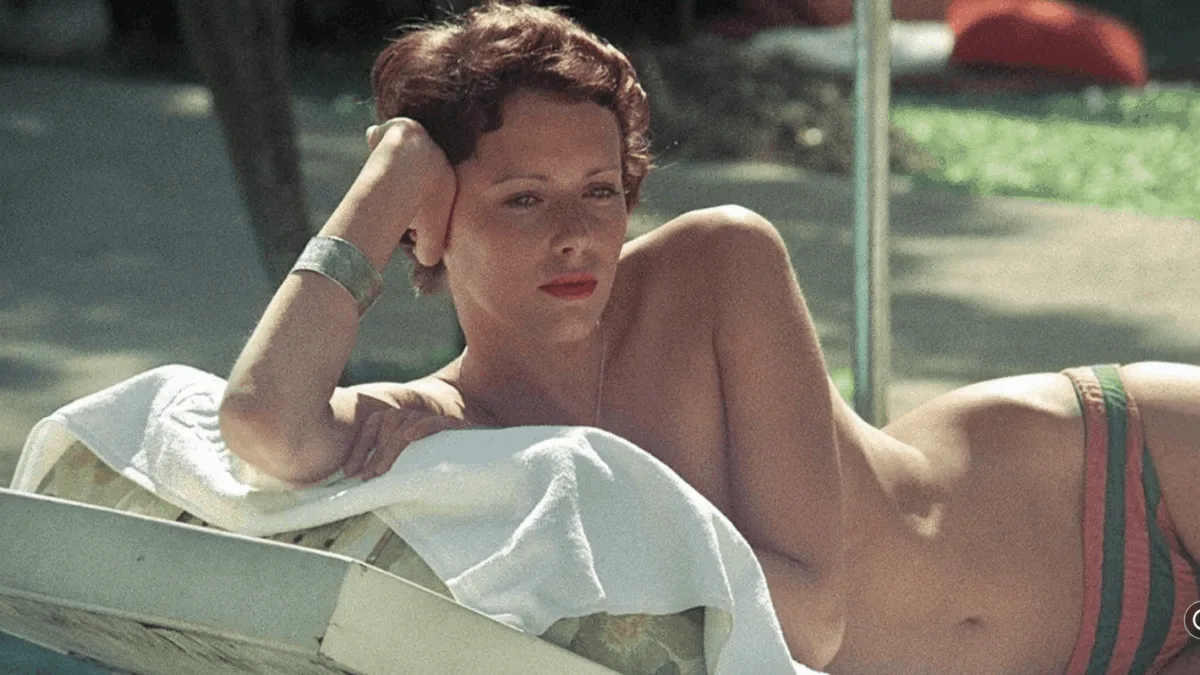
A bored diplomat’s wife lands in Bangkok, slips into an open marriage, and becomes the exquisite centre of a very French lesson in sex, jealousy and dangerous freedom.
Emmanuelle arrives in Bangkok to rejoin Jean, her diplomat husband, and quickly discovers that married life among the wealthy French expatriates runs on cocktails, boredom and discreet adultery. Jean makes it clear that he does not expect fidelity; in fact, he encourages his wife to explore, convinced that jealousy can add heat to their marriage. Emmanuelle is hardly the innocent he imagines—she has already enjoyed two strangers during the overnight flight—but she remains curious, emotionally vulnerable and unsure where desire ends and love begins. Her first guide into this languid sexual playground is the shameless Marie-Ange, whose intimate questions and casual masturbation leave Emmanuelle startled but fascinated. There is also Ariane, her sensual squash partner, who wants Emmanuelle for herself while sleeping...
with Jean on the side. Yet the woman who truly catches Emmanuelle’s eye is Bee, an aloof archaeologist who avoids the embassy crowd. Emmanuelle pursues her through Bangkok’s canals and follows her to a remote excavation camp, where their attraction finally becomes physical. What Emmanuelle takes for romance, however, Bee treats as a passing encounter, sending her home humiliated and in tears. That rejection—and her anger over Jean and Ariane—pushes her towards Mario, an older man with the voice of a philosopher and the instincts of a decadent libertine. He promises to free her from guilt, possessiveness and conventional love, but his idea of “education” carries the film into far darker and more troubling territory. Director Just Jaeckin is less interested in tight storytelling than in mood: bare skin, wicker furniture, swimming pools, drifting smoke, humid nights and bodies arranged like fashion photographs. The pace is slow and sometimes downright sleepy, while Mario’s speeches about erotic freedom can sound like philosophy written after too much wine. Still, the picture has a hypnotic pull. Beneath its glossy surface lies an uneasy story about a woman being encouraged—and at times manipulated—to turn herself into somebody else’s fantasy. The film sells liberation, but it never completely settles the question of whose liberation this really is.
This is pure early-1970s European permissiveness, made when mainstream cinema was testing how much sex it could show without becoming hardcore pornography. Much of it was filmed around Bangkok, Chiang Mai and the Mae Klong waterfalls, with further location work on La Digue in the Seychelles and interiors completed in Paris. The result has the humid, half-dreaming vibe of an expensive holiday slowly sliding into erotic delirium, helped by Pierre Bachelet’s teasing, instantly memorable music.
Sylvia Kristel is the reason the film still holds the eye. Tall, slender and effortlessly feminine, she gives Emmanuelle a cool, sleepy sensuality that feels natural rather than performed. Her long limbs, soft expressions and elegant nudity suit Jaeckin’s camera perfectly, yet there is also a wounded uncertainty behind her gaze. The film offers abundant female nudity, masturbation, lesbian intimacy and simulated sex, but remains softcore rather than anatomically explicit. It is sensual, occasionally daring and sometimes disturbing—not a nonstop orgy, but a glossy erotic fantasy built around Kristel’s unforgettable beauty.

Sign in to comment
The same account you use to watch films.