

The Exterminating Angels (2006) – AKA Les Anges Exterminateurs
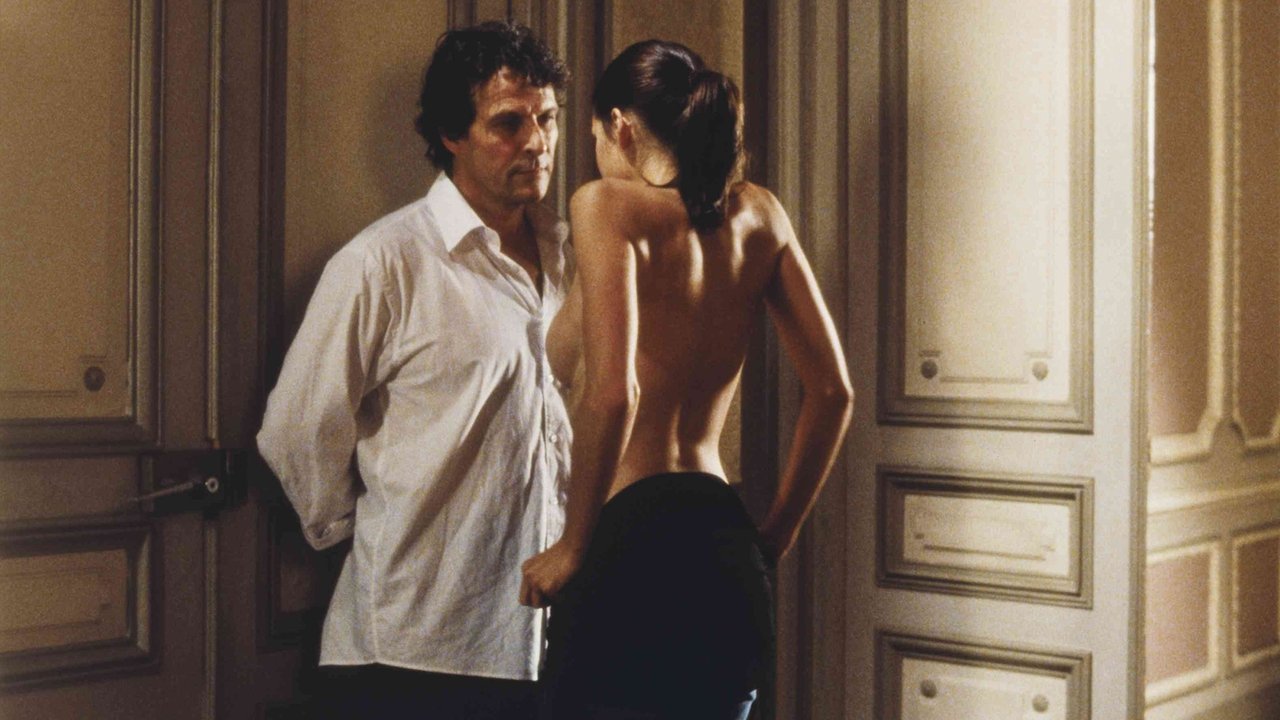
A Film Director Goes Looking for the Truth About Female Pleasure—and Finds Three Beautiful Women Willing to Take His Dangerous Experiment Much Further Than Expected.
François is a filmmaker preparing a project about female desire, but ordinary screen tests cannot give him the honesty he wants. After a string of actresses refuse his increasingly intimate requests, he finds Julie and Charlotte, two young women prepared to cross the usual line between acting and genuine arousal. Their auditions begin with confession and teasing exhibitionism, then move into hidden public masturbation, private hotel sessions and encounters staged specifically for François’s watchful camera. Stéphanie, the restaurant waitress who catches one of their secret games, is fascinated rather than shocked and soon talks her way into the experiment. With three women involved, the rehearsals become increasingly physical: solo pleasure gives way to caressing, lesbian intimacy and a prolonged nude threesome in...
which professional distance all but disappears. François insists that he is pursuing cinematic truth, yet jealousy, emotional dependence and conflicting expectations begin to infect the group. The women are not passive dolls; they test him, deceive him, compete with one another and sometimes appear to understand his weaknesses better than he understands theirs. His marriage comes under pressure, the production starts slipping beyond his control, and the line between artistic collaboration and personal obsession becomes impossible to see clearly.
Brisseau films all this as a strange mixture of erotic drama, confessional autobiography and supernatural morality play. Mysterious female apparitions observe François, while the spirit of his grandmother seems to warn him that curiosity and desire carry a price. The result is not a carefree skin flick. It is provocative, cerebral, voyeuristic and often deliberately uncomfortable—a film fascinated by the beauty of women surrendering to pleasure, but equally interested in the trouble that follows when a man believes his artistic intentions place him above ordinary consequences.
This is unmistakably a product of mid-2000s French arthouse cinema, when filmmakers could still put dangerous sexual ideas on screen without explaining every moral position to the audience. Shot around Paris, including streets in the 9th and 10th arrondissements, it has an intimate, low-budget atmosphere built from modest offices, restaurants, apartments and hotel rooms. The everyday locations make the erotic tests feel secret and illicit, while carefully sculpted lighting and the ghostly interludes give the film an unexpectedly baroque, almost dreamlike edge.
Maroussia Dubreuil’s Charlotte is the most emotionally volatile presence, mixing vulnerability, hunger and unpredictability in a performance that keeps the sexual games from feeling merely mechanical. Lise Bellynck gives Julie a cooler, more composed sensuality, while Marie Allan’s Stéphanie enters with the bold curiosity of a woman who has witnessed something forbidden and decides she wants her share. All three are striking in different ways, and Brisseau’s camera openly admires their faces, bodies and contrasting styles of femininity. The nudity is extensive and full-frontal, with explicit-looking masturbation, intimate touching and a lengthy lesbian threesome, although it remains art-house softcore rather than hardcore pornography—there is no visible penetration. Its strongest erotic moments come not simply from naked flesh but from embarrassment, anticipation and the charged awareness that François is watching every tremor, hesitation and climax.
A filmmaker holds a series of boundary-pushing auditions for his latest project: a thriller on the subject of female pleasure.
Sign in to comment
The same account you use to watch films.