

The Voyeur (1994) – AKA L’uomo Che Guarda
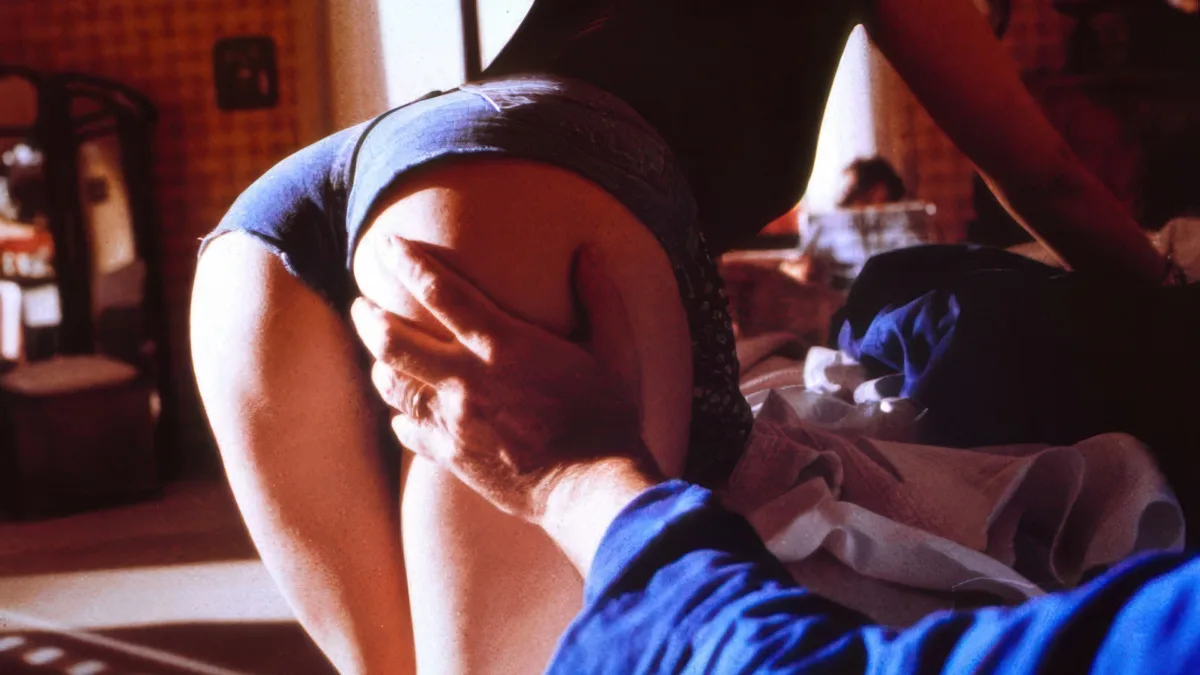
A jealous professor can lecture on voyeurism, but when his wife vanishes and his randy father keeps scoring, looking becomes a full-time nervous breakdown.
Edoardo, known as Dodo, is a young French-literature professor who understands desire perfectly well on paper and hardly at all in his own life. His beautiful wife Silvia has grown tired of his withdrawn, joyless nature and leaves him for another man, although she keeps drifting back into his bed just often enough to preserve his hope and sharpen his jealousy. Dodo remains in the family home with Alberto, his bedridden father, a shameless old womaniser who may have lost the use of his legs but certainly not his appetite. While Dodo broods, watches and imagines, Alberto enjoys the very hands-on attention of Fausta, his voluptuous nurse, who treats modesty as an optional extra. The contrast eats at Dodo: the son is young but paralysed by thought, while the father is physically helpless yet gloriously alive below the waist. Even...
when the seductive student Pascasie poses naked for him and an inviting female friend turns up, Dodo cannot stop being a spectator long enough to seize the moment. His mind instead circles Silvia, revisiting their marriage, childhood memories of catching his parents making love, and feverish fantasies in which every naked woman seems to wear his wife’s face. Then his suspicion begins settling on someone painfully close to home, and Silvia’s unexplained movements—and sudden willingness to reconcile—make the domestic mystery even more poisonous.
Tinto Brass tells the story in flashbacks, fantasies and stolen glimpses, making us share Dodo’s habit of spying through windows, doorways, mirrors and cracks. It is part psychological drama, part dirty joke and part visual lecture on scopophilia, with the camera constantly reminding us that watching is never innocent. The plot is deliberately thin in places, the dubbing and performances can feel cartoonish, and Dodo is more fascinating than likable, but the film has a darker emotional bite than Brass’s breezier erotic romps. Beneath all the breasts, buttocks and bedroom gymnastics is a genuinely sad portrait of a man emasculated by jealousy, family history and his inability to participate in the life he cannot stop observing. The lush colours, deep shadows, curved interiors, eye-like stairways and cheeky zooms give the sleaze an unusually considered shape, while Riz Ortolani’s restless jazz score swings between sultry and faintly absurd. It is erotic cinema with Freud hiding behind the curtains—and probably taking notes.
This is pure mid-1990s Italian erotica: pre-internet, smoke-filled, sexually uninhibited and cheerfully unconcerned with respectable taste. Set in Rome and filmed there, including location work at the Plinius beach establishment, it moves between an eccentric bourgeois home, university halls, cinemas and sun-drenched nudist fantasy. The vibe is glossy yet claustrophobic—Roman heat outside, jealousy sweating through the wallpaper inside.
Katarina Vasilissa plays Silvia less as a conventional character than as Dodo’s maddening erotic ideal: cool, mysterious, beautifully built and photographed as though every skirt, stocking and sideways glance were a private invitation. Cristina Garavaglia’s brazen, big-bosomed Fausta brings the bawdy humour, while Raffaella Offidani makes Pascasie an uninhibited temptation Dodo would need to be dead not to notice. The uncut version sits right on the border between softcore and hardcore, with abundant full-frontal nudity, graphic sexual staging and one notorious cigar routine that is not for the bashful. Brass shows almost everything, often from angles a respectable cameraman would pretend never occurred to him.



Sign in to comment
The same account you use to watch films.