

The Lovers (1958) – AKA Les Amants
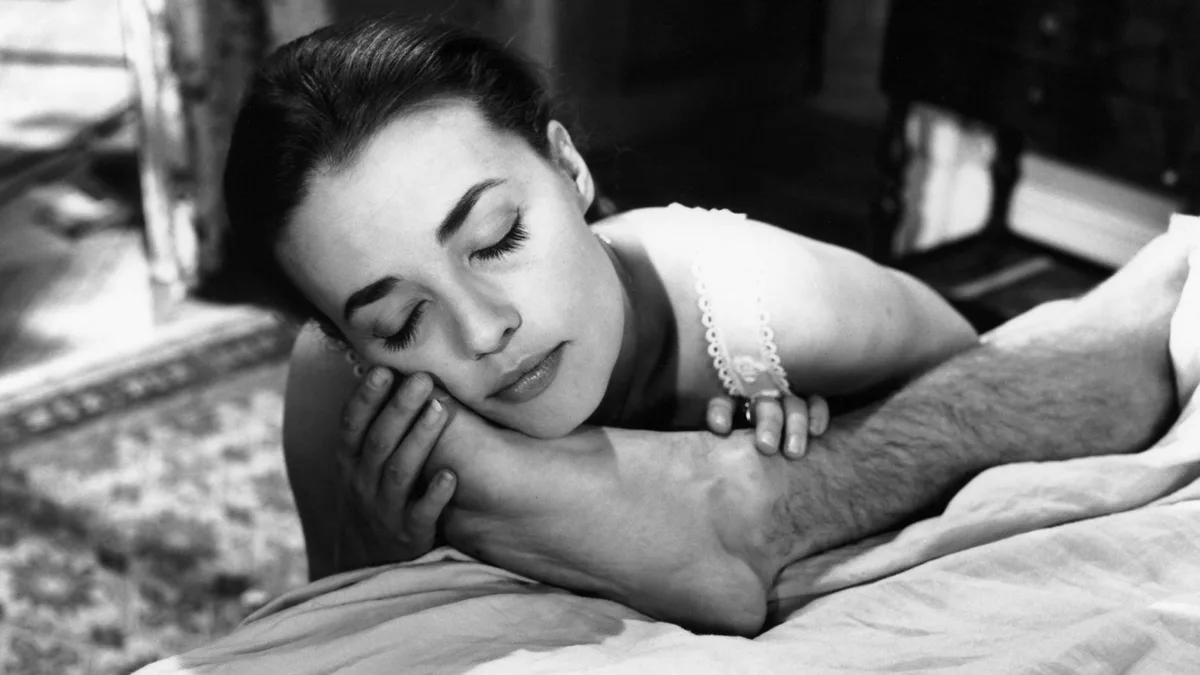
A bored bourgeois wife has a husband at home, a polished lover in Paris and every luxury money can buy—then one night with a near-stranger makes the whole arrangement look like a lifeless sham.
Jeanne Tournier is thirty, beautiful, comfortably married and quietly suffocating in a grand country house near Dijon. Her husband Henri owns a newspaper and treats her partly as an ornament, partly as a problem to be managed, while Jeanne escapes to Paris whenever she can, supposedly to visit her fashionable friend Maggy. In reality, she is sleeping with Raoul, an elegant, vain polo player whose Jaguar, clothes and manners promise excitement without offering much genuine feeling. Henri clearly smells adultery in the air, so he corners Jeanne into inviting Maggy and Raoul to their home for the weekend—a civilized little trap in which everybody must smile across the dinner table while knowing more than they admit. On her way back from Paris, however, Jeanne’s Peugeot breaks down, and she is...
rescued by Bernard, a young archaeologist driving a battered 2CV packed with tools. Bernard is intelligent, blunt and unimpressed by her money or social games, which makes him very different from the decorative people filling her life. He brings her home late, Henri mischievously insists that he stay, and the evening develops into a wonderfully uncomfortable battle of glances, jealous remarks and wounded pride. Then the film changes gear completely. Unable to sleep, Jeanne wanders into the moonlit grounds and meets Bernard again. Their earlier irritation gives way to curiosity, physical closeness and an almost reckless certainty that neither expected. A walk through the garden, a drifting boat and the sound of Brahms turn this awkward house party into a sensual dream. Louis Malle spends the first half gently mocking wealthy people who confuse boredom with tragedy, then strips away the drawing-room comedy and lets desire take command. The transition is bold, romantic and deliberately irrational: this is not love built through sensible courtship but two bodies and two imaginations deciding, within hours, that the life waiting outside this night may no longer be enough.
Made at the end of the 1950s, the film catches France between stiff pre-war bourgeois respectability and the freer, more impulsive spirit of the coming New Wave. It was filmed in Paris, Dijon and the surrounding Burgundy and Côte-d’Or countryside, with Henri Decaë’s wide black-and-white photography making both worlds seductive in different ways. Paris offers polo grounds, parties, fashionable clothes and expensive cars; the provincial estate offers old servants, formal dinners, shadowy corridors, water, trees and open night air. Even the automobiles reveal the characters: Raoul’s flashy Jaguar belongs to vanity, Jeanne’s smart Peugeot to privilege, and Bernard’s clattering little 2CV to an untidy but more honest kind of freedom. The overall vibe begins cool, ironic and socially observant before becoming intimate, hushed and intensely romantic.
Jeanne Moreau owns the picture without playing Jeanne as an innocent victim. She can be selfish, spoiled and careless toward her husband and young daughter, but she is also visibly starved of tenderness. Moreau’s beauty is not the obvious pin-up perfection of the period; it lies in her heavy-lidded eyes, full lips, confident carriage and that remarkable face, severe one moment and radiant the next. Malle first presents her in immaculate couture, pearls and a carefully arranged hairstyle, then gradually loosens the image until she appears in a flowing white nightdress with her hair down, softer and far more desirable. The famous lovemaking sequence remains powerful because it concentrates on her response—her breathing, expression and surrender to pleasure—rather than displaying bodies mechanically. There is a brief glimpse of her breast, nude embracing and an unmistakable suggestion of cunnilingus, but little by modern standards. What made it explosive in 1958 was its tenderness and its refusal to punish or shame a married woman for enjoying sex. Moreau turns that pleasure into something warmer and more dangerous than simple nudity: the sight of a woman suddenly realizing that she feels alive.





Sign in to comment
The same account you use to watch films.