

Devilish Education (1995) – AKA Diabelska Edukacja
A Beautiful Innocent Polish nymphet tends her cattle in a catholic countryside, where one summer day she meets the Devil himself, who teaches her how to live.
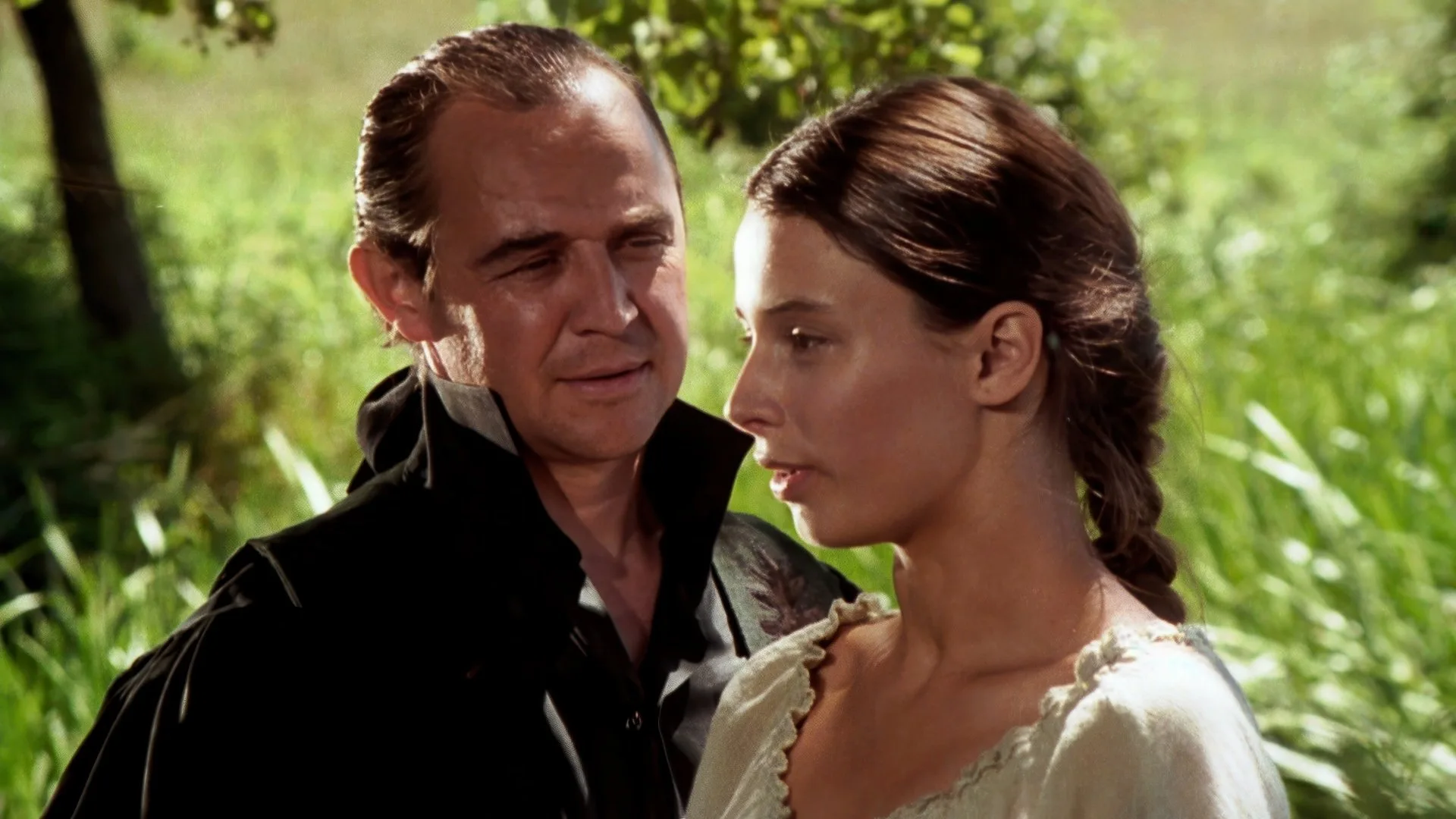
A barefoot village innocent meets a devil in black who teaches her that books, Mozart, fine food and naked desire can all belong to the same delicious education.
Gosia is a sheltered milkmaid living with her widowed mother in a poor Polish village at the end of the nineteenth century. While bathing naked in a secluded river, she senses that someone is watching. The next day, a mysterious painter dressed in black appears beside the water and shows her a portrait he has made of her nude body. She is embarrassed but also fascinated, and instead of fleeing, she begins visiting him. Their meetings become lessons in everything her narrow world has denied her: reading, music, art, good manners, rich food and physical intimacy. As Gosia grows more confident and sensually alive, her mother notices the change and turns to the village’s familiar guardians of virtue. A priest questions the girl about her thoughts, while a doctor is summoned to determine whether she has been “ruined.” Janusz...
Majewski treats the whole affair as a sly erotic fairy tale rather than a heavy moral drama. The stranger may be a real man, the Devil himself or simply the lover Gosia’s imagination has created, but the film wisely preserves that mystery. Its point is the awakening: a young woman discovering beauty, appetite and pleasure while respectable society fusses around her trying to explain them away.
Made as part of the international Erotic Tales series, this compact Polish-German production was filmed in Poland and unfolds almost entirely in a sunlit rural landscape of meadows, water, livestock and humble wooden interiors. Although produced in the mid-1990s, its period setting gives it the character of an old folk legend told with a knowing smile. Witold Adamek’s warm, painterly photography makes the countryside feel lush and inviting, while the Mozart, formal meals and flashes of cultured sophistication contrast nicely with Gosia’s simple peasant life. There is religion and temptation here, but very little gloom or punishment. The mood is playful, sensuous and gently irreverent—a rustic celebration of curiosity with enough supernatural suggestion to keep the Devil’s identity pleasantly uncertain.
Renata Dancewicz carries the film with an appealing mixture of shyness, mischief and growing self-possession. She has a soft, natural beauty perfectly suited to the pastoral setting, and her transformation is conveyed less through speeches than through her eyes, posture and increasingly relaxed presence. Marek Kondrat plays the stranger with urbane calm rather than theatrical menace; his Devil is a patient teacher, seducer and gentleman of worldly pleasures. The film contains sustained nudity and simulated lovemaking, with Dancewicz’s body photographed openly and aesthetically, but it never becomes crude or pornographic. Its erotic charge comes from nakedness in nature, the thrill of being admired and the gradual surrender of embarrassment—not frantic bedroom gymnastics. At only twenty-nine minutes, it is brief, cheeky and visually seductive, with Dancewicz providing the beauty and feminine warmth that make this devilish little lesson memorable.
In a rural Catholic village, young Gosia tends cattle and lives an innocent, sheltered life. One summer day, while bathing in the river, she is unknowingly observed by a mysterious painter. When he later reveals his portrait of her, Gosia’s initial shame gives way to curiosity, drawing her into an awakening of desire and a confrontation with temptation.
After taking a dip in the lake in her birthday suit, the cute beauty encounters an enigmatic stranger dressed in black, who who introduce her to the secret pleasures of the flesh, shows her how to enjoy life and appreciate the beauty around her.




Sign in to comment
The same account you use to watch films.