

Miranda (1985)
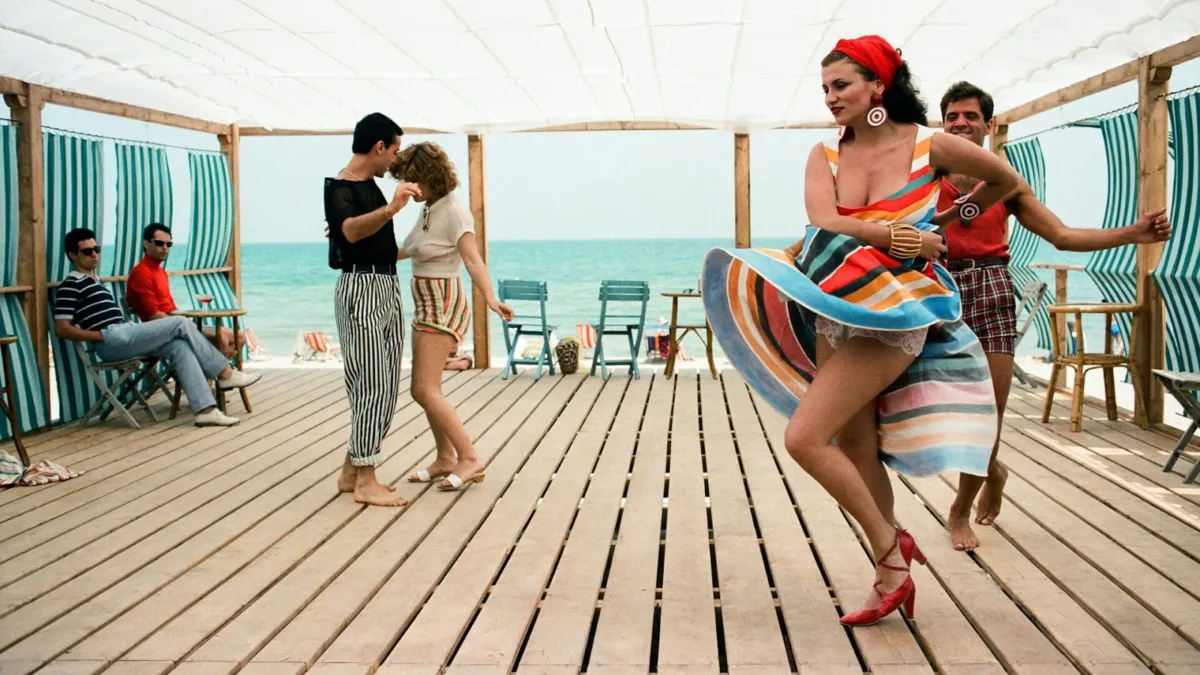
A voluptuous innkeeper keeps her missing husband’s memory, several eager lovers and half the Po Valley simmering in this cheeky postwar erotic comedy.
Miranda runs a country inn while waiting—at least officially—for Gino, the husband who vanished during the war. She has not declared herself a widow, but neither grief nor convention has persuaded her to live like a nun. Her regular lover is Berto, a handsome truck driver whose absences suit her freedom better than his jealous returns. When he is away, Miranda entertains Carlo, an older, wealthy former Fascist who arrives with expensive gifts and the comfortable confidence of a man accustomed to buying what he wants. Then Norman, a young American engineer working on a local methane pipeline, brings novelty, muscle and foreign charm into her already crowded romantic calendar. Watching all this from behind the bar is Tony, her shy, frustrated employee, who genuinely loves her but can barely get close enough to say so.
Miranda knows...
exactly what each man wants, and Tinto Brass lets her move among them with playful ease: accepting pleasure, provoking quarrels, handing out blunt advice and refusing to confuse desire with surrender. Loosely inspired by Carlo Goldoni’s The Mistress of the Inn, the film is less interested in a tightly wound plot than in watching Miranda test her suitors across a succession of flirtations, encounters and comic humiliations. Berto offers passion but also possessiveness; Carlo brings luxury with strings attached; Norman is exciting precisely because he may not remain; and Tony’s quiet devotion becomes harder to dismiss as the others reveal their limitations. Brass films this romantic roundelay as a bright, shameless celebration of appetite, forever interrupting seduction with jokes, awkward male behaviour and deliberately earthy details. The men swagger in imagining themselves hunters, only to discover that Miranda has been choosing the pace, place and terms all along. It is saucy, episodic and occasionally so preoccupied with bodies that the story nearly wanders out of the room without its trousers, yet its warmth keeps it from feeling cold or mechanical. Beneath the bare flesh and bedroom farce is a surprisingly affectionate question: when a woman can have attention, gifts and sex without promising herself to anyone, what could finally make one man worth choosing?
Set in the early 1950s across the flat, rural country of Italy’s lower Po Valley, the film carries the flavour of a society shaking off wartime austerity through wine, food, dancing, gossip and vigorous sex. Much of it was shot around Pomponesco, with additional filming in Comacchio, Riva del Po, Ancona and Senigallia. The vibe is provincial, sun-warmed and cheerfully indecent—part village comedy, part erotic postcard, with bright colours and Riz Ortolani’s music keeping everything light on its feet.
Serena Grandi does not merely play Miranda; she fills the film with her. Curvy, smiling and gloriously uninhibited, she combines ripe physical beauty with the amused confidence of a woman who knows every male eye in the room has already surrendered. Her teasing glances and relaxed humour matter as much as her nudity, though Brass certainly gives admirers an exhaustive tour of her breasts, bottom and full-frontal charms. The sex is explicit by mainstream standards, and the uncut version brushes close to hardcore in places, but Grandi’s warmth makes it feel more playful than sordid. She is the feast, the hostess and the woman deciding who, if anyone, gets dessert.




Sign in to comment
The same account you use to watch films.