

Julia (1999) – AKA Giulia
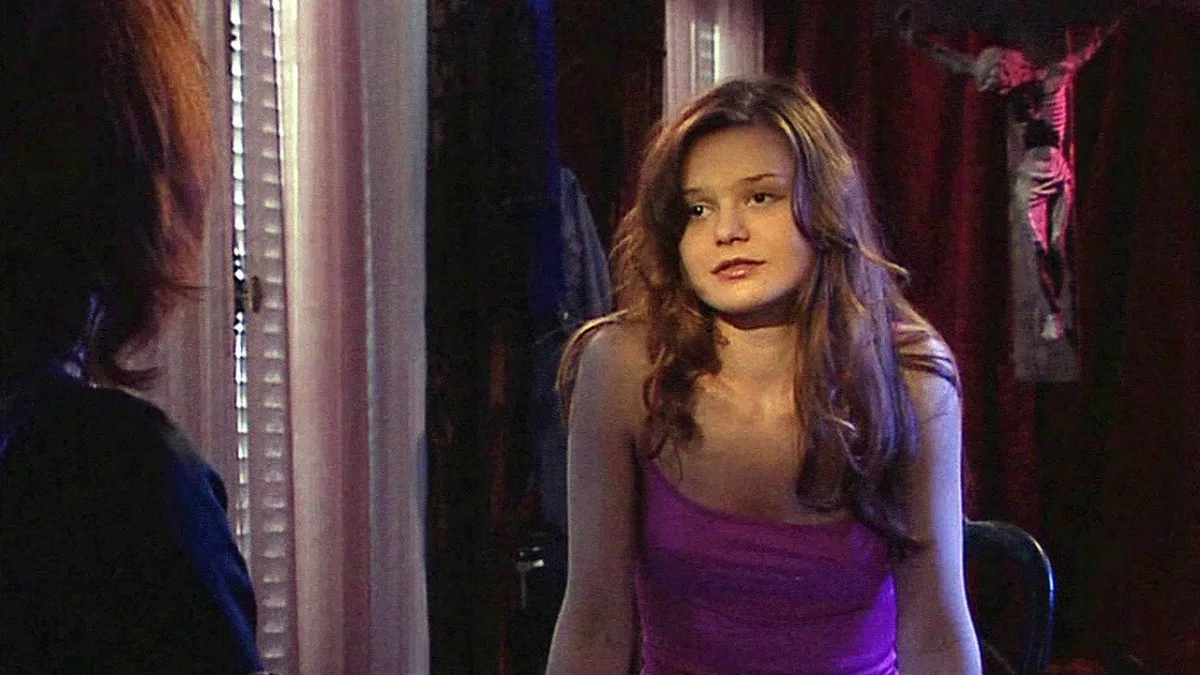
A rebellious dancer, trapped between a pious family and her own hungry ambitions, turns sex, beauty and nerve into her ticket from Paris to Rome.
Giulia is a young dancer with several ambitions and very little patience for anyone telling her how a woman ought to behave. When her modern-dance class prepares for a trip to Rome, the controlling Gustavo excludes her without a proper explanation. Home offers no comfort: her mother and sister cling to religion and convention, while Giulia openly mocks their taboos and insists on living by her own rules. She also dreams of acting, but an audition quickly becomes a casting-couch proposition from a sleazy theatre man who assumes her beauty makes her easy prey. Giulia plays along just long enough to turn the tables, inviting him to see her perform at a Paris sex club. There he discovers that she and her lover Eric do not merely tease the crowd—they have real sex onstage—and his fantasies collapse when she challenges him to join them. Around...
this central confrontation, the film follows Giulia through parks, churches, streets, clubs and odd encounters with strangers, giving her journey the loose shape of an erotic diary. She eventually learns that Gustavo’s hostility is tied to his secret affair with Eric, turning her exclusion from Rome into something far more personal. Rather than accepting the humiliation, Giulia pushes into their relationship, confronts the two men and determines to reach Rome on her own terms. The story is rough-edged and sometimes dreamlike, but its heroine has an engaging mixture of innocence, defiance, humour and sexual fearlessness.
Roy Stuart shoots the film as an erotic, expressionistic collage rather than a neat conventional drama. Handheld street footage, sudden edits, nightclub colour and candid-looking public encounters create the feeling of following Giulia through a half-real, half-fantasised world. The explicit sex is not separate decoration; it becomes her weapon against hypocrisy, jealousy and male presumption. Stuart’s own haunting music adds mood, though the loose structure can sometimes feel improvised and unruly.
Made at the end of the 1990s, the film belongs to that freer European erotic-video era when sex, performance art and low-budget experimentation could comfortably share the same frame. Paris supplies dance studios, churches, parks, discos and the live-show underworld, while Rome represents escape, sensuality and forbidden adventure. The vibe is intimate, grubby, playful and rebellious—less polished cinema than a private erotic scrapbook that keeps slipping into reality.
Anna Bielska, credited here as Anna Biella, carries the picture with her wide-eyed prettiness, slender dancer’s body and an impish smile that can move from sweet to openly provocative in seconds. She makes Giulia feminine without making her passive: playful, stubborn and fully aware of the effect she has on men. The camera adores her face, legs and graceful movement, but she gives the role more personality than the film’s thin production might suggest. The explicitness is very high, including prolonged full-frontal nudity, stripping, oral sex and unsimulated intercourse during the live stage performance and later encounters. Bielska’s relaxed physical confidence is the film’s main attraction, turning Giulia into a genuinely memorable erotic heroine rather than just another naked body passing through the frame.


Sign in to comment
The same account you use to watch films.