

Breaking the Waves (1996)
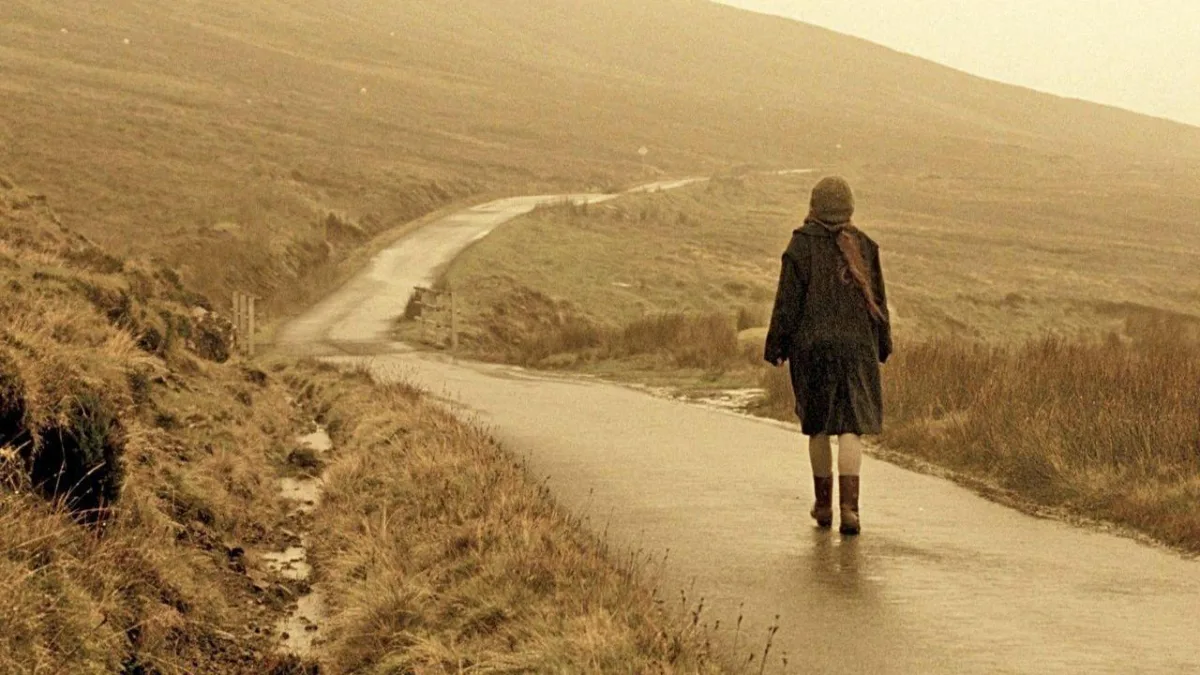
A devout Scottish bride gives herself body and soul to her husband, only to see love, sex and faith twisted into a harrowing test of sacrifice.
Bess McNeill is a sweet, emotionally fragile young woman living in a stern Calvinist village on the Scottish coast in the early 1970s. She marries Jan, a worldly Danish oil-rig worker, against the wishes of church elders who distrust outsiders and expect women to remain quiet and obedient. Their early married life is warm, playful and intensely sexual; through Jan, Bess discovers the joy of her own body and blooms as a wife. But she cannot bear his long absences offshore. After she begs God to send him home, Jan is almost killed in an industrial accident and returns paralysed. Bess immediately believes her selfish prayer caused it. Unable to make love and fearing she will waste her youth beside his bed, Jan tells her to sleep with other men and describe each encounter to him, pretending they are still lovers through her stories. At first...
she refuses, but when his health worsens, guilt, religious obsession and desperate hope begin working together inside her troubled mind. She comes to believe that every sexual surrender she makes will somehow restore him. What begins with awkward attempts at seduction turns into encounters with strangers, public humiliation and increasingly dangerous acts, while her loyal sister-in-law Dodo and Jan’s doctor struggle to pull her back. The village brands her a whore, the church casts her out, and Jan himself becomes horrified by the path his request has opened. This is not a sexy little tale of adultery. It is a bruising romantic tragedy about a woman whose pure devotion becomes so absolute that she can no longer tell love from self-destruction.
Lars von Trier shoots the film with restless handheld cameras, grainy colours and tight, searching close-ups that make Bess’s emotions feel almost indecently exposed. The raw realism is broken by grand landscape chapter cards accompanied by glorious 1970s rock songs, giving the viewer a brief breath before the pain resumes. Sex begins as tender marital pleasure, then becomes ritual, punishment and sacrifice. The long running time can feel punishing, but that intensity is part of the design.
Set during the early-1970s clash between fading religious authority and a freer sexual world, the film carries the damp, isolated mood of a place where everyone knows everyone’s business. Its exteriors were filmed around the Isle of Skye, Lochailort, Mallaig and Morar, with interiors completed in Denmark. Bleak mountains, cold harbours, grey seas and the distant oil rigs give it a rugged masculine backdrop, while the classic-rock interludes add strange warmth and romance. The vibe is intimate, windswept, sensual and spiritually feverish.
Emily Watson is astonishing in her screen debut. With her soft face, unruly reddish-brown curls, open mouth and huge pleading eyes, she makes Bess look both womanly and childlike—a warm, needy little creature suddenly awakened by a man’s touch. Her wedding-night delight, shy hunger and complete lack of vanity give the early scenes a lovely feminine sensuality, but Watson is even more powerful when that radiance begins to crack. There is strong nudity and graphic sexual material, including frank marital sex, masturbation, prostitution and threatening encounters, yet the later scenes are deliberately uncomfortable rather than conventionally erotic. Watson exposes far more than her body; she lays bare Bess’s desire, terror, innocence and reckless loyalty. Katrin Cartlidge supplies the harder, protective female presence as Dodo, but Watson owns the film—vulnerable, passionate and painfully unforgettable.








Sign in to comment
The same account you use to watch films.