

Devil in the Flesh (1986)
A young Italian boy has an Intense Obsessive affair with a Beautiful but mentally ill woman, who's being treated by the boy's psychotherapist father.
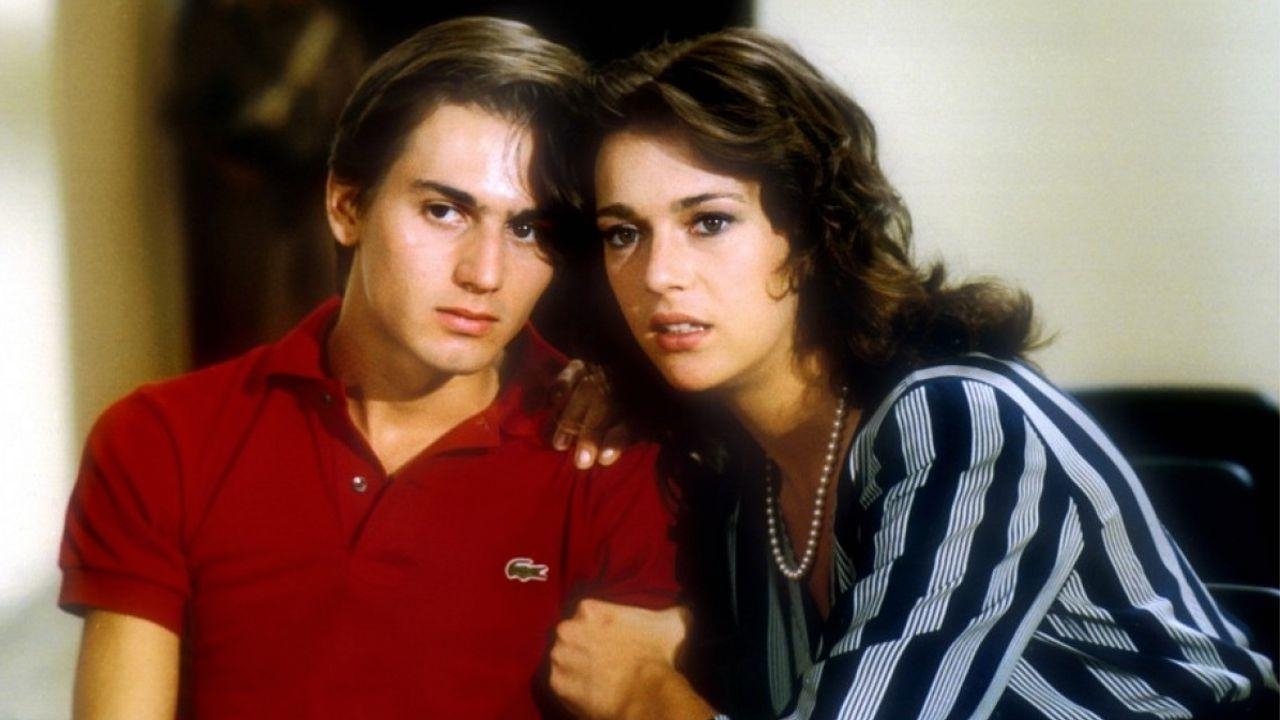
A reckless Roman affair pits raw desire against terrorism, psychiatry and bourgeois respectability—with Maruschka Detmers lighting the fuse.
Andrea is a high-school senior supposedly preparing for his final exams when a disturbance on the rooftops opposite his classroom draws his eye to Giulia, a beautiful, nervy woman watching the drama unfold. One glimpse is enough: he climbs through the classroom window, follows her across Rome and eventually tracks her to a courthouse. Giulia is attending the trial of former Red Brigades members, including Giacomo, the imprisoned terrorist turned informer she intends to marry. The arrangement is already a psychological minefield—her own father was murdered by the Brigades—and Giulia seems trapped between grief, duty, social expectation and a depression everyone around her prefers to label rather than understand. Andrea barges into that paralysis with the glorious selfishness of youth. Their glances become meetings, their meetings become an...
affair, and soon textbooks, wedding plans and political loyalties are being discarded with the underwear. Yet this is no cosy older-woman fantasy. Giulia can be playful, wounded, ravenous and frighteningly remote within the same scene, while Andrea’s infatuation carries the arrogance of a boy convinced that desire makes him a grown man. The complications become almost absurdly intimate when we learn that Andrea’s psychiatrist father once treated Giulia and regards her as unstable. Giacomo’s formidable mother discovers the lovers and begins defending her son’s future, Andrea’s family closes ranks, and the approaching verdict threatens to return Giulia’s fiancé to a life she may no longer want. Marco Bellocchio treats the affair as a private revolution unfolding in the wreckage of a failed public one: yesterday’s young radicals have become prisoners, informers, Catholics or respectable patients, while Andrea rebels through appetite rather than ideology. At times the film feels like a psychoanalytic seminar interrupted by vigorous sex, and its political arguments can be deliberately oblique. Andrea is also rather blank beside Giulia. But Detmers gives the story its pulse, and Giuseppe Lanci’s controlled, sensual photography turns every naked encounter into something caught between liberation and emotional danger. The result is uneven, provocative and oddly haunting—less a conventional romance than a portrait of two people using each other as an escape hatch while the adults argue over who owns the key.
This is Italy in the uneasy aftermath of the Years of Lead, when terrorism had lost its revolutionary glamour but its victims, trials and family grudges remained painfully present. Shot in Rome during the summer of 1985, the film avoids the usual postcard tour and favours rooftops, courthouse corridors, bridges over the Tiber, sun-bleached streets and cool bourgeois interiors. Giulia’s spacious apartment becomes the real battlefield: minimalist rooms, half-drawn blinds, a piano and pale shafts of light give the lovers freedom while making them look strangely exposed. Bellocchio’s Rome feels watchful and slightly unreal, with families, priests, lawyers and psychiatrists forever peering into private lives. The vibe is cerebral Euro-erotica with a nervous breakdown brewing underneath—slow in places, wilfully puzzling in others, but charged by sudden laughter, tears, dancing and bursts of physical abandon.
Maruschka Detmers is unquestionably the main event. Dark-eyed, loose-limbed and stunning without appearing cosmetically manufactured, she plays Giulia as a woman whose sexuality is both life force and emergency signal. She can wander naked through a room with complete ease, then crack into manic laughter or wounded silence and make the temperature drop. The film contains frequent nudity, prolonged lovemaking and a notorious unsimulated fellatio scene, along with an audacious prison-visit episode in which Giulia services her fiancé beneath the table. This is not soft-focus teasing or strategically arranged bedsheets; Bellocchio puts bodies, genitals and oral sex plainly on screen. Yet Detmers’ fearless acting keeps Giulia from becoming mere erotic furniture—she is desirable, unpredictable and emotionally exposed, the sort of woman who could revive a young man’s entire existence while making a spectacular mess of everyone else’s.
A young Italian boy falls in love with a Beautiful but mentally unstable woman, who’s engaged to a leftist radical terrorist soon to be released from prison. They have an Obsessive, Intense and reckless sexual affair against the wishes of her fiancée’s mother and the boy’s father who’s also her psychotherapist.
The Beautiful, Netherland born French actress Maruschka Detmers has acted Very well as the mentally unstable girl Guilia… and She’s Super Hot in that Retro Italian way.






Sign in to comment
The same account you use to watch films.