

La joven casada (1975)
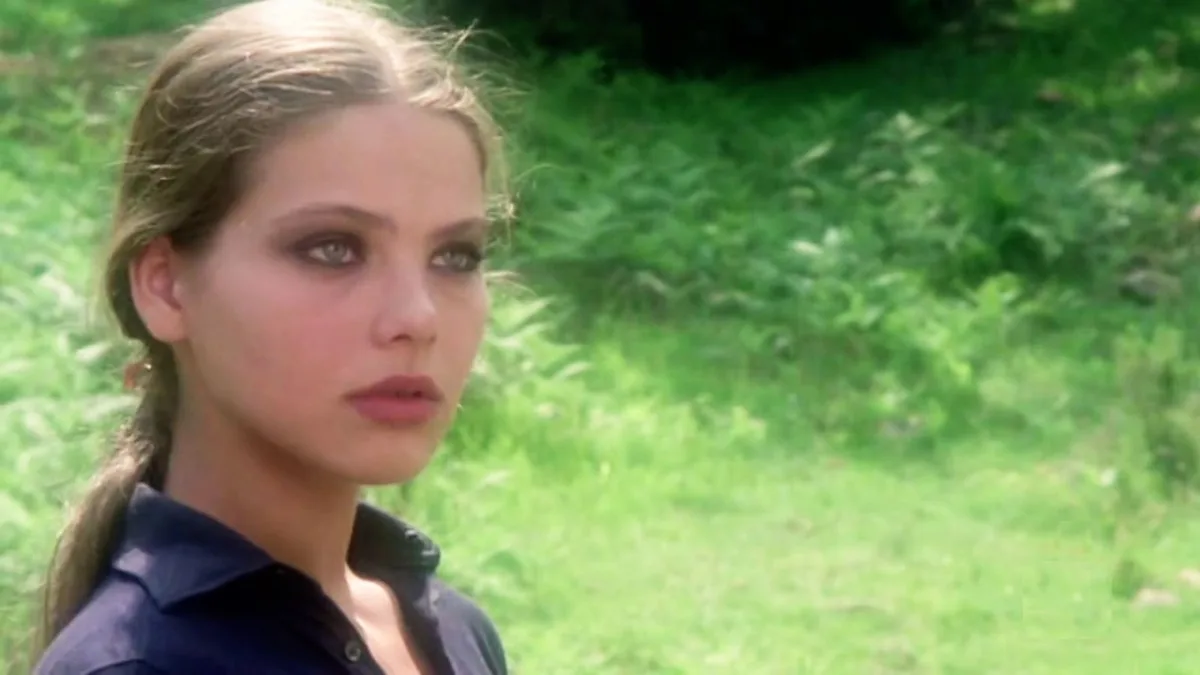
A gorgeous young wife walks out on a husband who chose comfort over courage—and finds a handsome pilot circling the marital wreckage.
Camino and Jorge reach their first wedding anniversary with completely different ideas about the year behind them. He thinks married life has gone rather well; she feels the man she loved has quietly disappeared. Their romance began at a hospital in Santiago de Compostela, where Camino worked as a nurse and Jorge was finishing his medical studies. They dreamed of useful work, independence and a life built on their own terms. Then Jorge’s wealthy, domineering father—a famous surgeon who considers Camino’s modest family beneath his son—pulled them into his comfortable Madrid world. Jorge surrendered their humanitarian plans, accepted his father’s influence and settled into the very bourgeois existence he had once rejected. Camino still loves him, which makes his collapse of backbone hurt more. On the night she finally leaves, an unpleasant encounter...
with two men sends her into a bar, where she meets Raúl, a confident, restless pilot who represents everything Jorge has stopped being. She returns to her mother’s home in Galicia, partly to escape and partly to test whether her husband cares enough to follow.
Mario Camus tells the story through memories, arguments and contrasts: Madrid’s moneyed confinement against the open Galician coast, Jorge’s passivity against Raúl’s appetite for movement, and Camino’s romantic hopes against the dreary compromises of adult life. A secondary couple who remain committed to socially useful work underline just how far Jorge has wandered from his younger self. When Raúl reappears—making a suitably cocky entrance in his aeroplane—Camino’s waiting game becomes a genuine emotional and sexual dilemma. Jorge eventually comes looking too, but his arrival does not magically restore the fellow she married. The film is uneven, occasionally too fond of literary references, and the male performances never quite match the intensity in Ornella Muti’s face. Antón García Abril’s recurring waltz can also become rather insistent. Still, there is something honest beneath its dated romantic machinery: this is less a steamy adultery romp than a melancholy portrait of a woman discovering that desire cannot repair a marriage unless the man beside her is willing to grow up. It ends up asking whether love means staying loyal to a person—or to the promise of who that person once meant to become.
Made in 1975, with Franco’s Spain nearing its historic turning point, the film carries the unease of a country caught between paternal authority and an uncertain freedom. Madrid feels enclosed, affluent and obedient, while Galicia—especially the Pontevedra coastline—offers wind, sea and breathing room. The vibe is wistful rather than wild: part marital melodrama, part social allegory, with salt air, fashionable interiors and a handsome aviator adding just enough danger.
Ornella Muti is the whole show: green-eyed, full-lipped and almost indecently lovely, yet never merely decorative. She gives Camino a soft, wounded femininity beneath the stubbornness, making her attraction to Raúl feel less like casual cheating than hunger for the passion her marriage has lost. The camera plainly adores her, and the film includes topless nudity and sensual bedroom material, but it is soft-core by modern standards—more bare breasts, longing looks and erotic suggestion than graphic sex.




Sign in to comment
The same account you use to watch films.