

The Dreamers (2003)
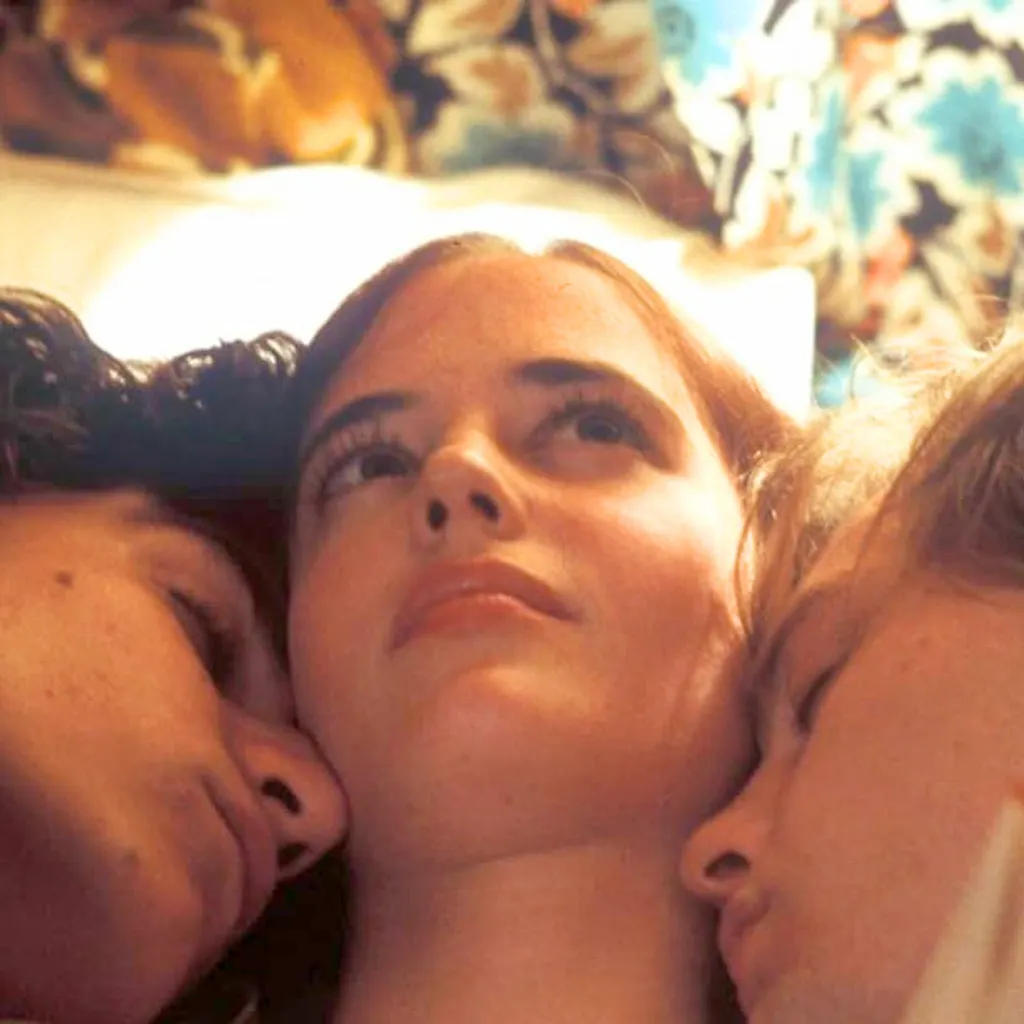
Paris burns, three gorgeous film nuts hide indoors, and Eva Green turns a crash course in cinema into the sexiest bad idea of 1968.
Matthew, a shy American student marooned in Paris, spends more time worshipping at the Cinémathèque Française than studying French. During the protest over the dismissal of its director, Henri Langlois, he meets Isabelle and Théo, beautiful twins who talk in movie quotations, smoke like chimneys and seem to have stepped straight out of the French New Wave. They take him home for dinner, and when their parents leave town, invite him to move into the family’s enormous apartment. At first it is a cinephile’s wet dream: the three race through the Louvre in imitation of Bande à part, argue over Chaplin and Keaton, debate Hendrix, Mao and Vietnam, and challenge one another to identify films from performed scenes. Then the forfeits begin. A wrong answer can mean public masturbation or sex on command, and Matthew discovers that the twins’ casual nudity hides...
a bond far more possessive and psychologically tangled than mere bohemian freedom. His reluctant initiation with Isabelle turns into genuine desire, revealing an unexpectedly vulnerable young woman beneath her provocative playacting. Matthew starts wanting a normal romance with her—dates, privacy, a life beyond the apartment—but normality is precisely what Isabelle and Théo have spent their lives avoiding. His growing intimacy with her threatens their sealed twin universe, while his attraction and hostility toward Théo create another current the film deliberately leaves crackling beneath the surface. Their rooms become increasingly untidy, their meals more primitive and their philosophical arguments more personal, as if three spoiled, clever children have declared independence without learning how to survive it. Bertolucci shoots their retreat with great affection but not complete approval. The classical film clips and loving recreations are not decorative name-dropping; these kids understand reality by turning it into cinema, using old movies as courtship, competition, camouflage and foreplay. What begins as a seductive celebration of youth gradually feels claustrophobic. Matthew can see that the twins’ private paradise is also a trap, but Isabelle’s beauty and Théo’s charisma keep dragging him back inside. Meanwhile, the real revolution is gathering force beyond the curtains, waiting to confront three dreamers who have been talking about changing the world while barely leaving the bedroom.
This is Paris in the spring of 1968: the Cinémathèque protests, student rebellion, Maoist posturing, anti-Vietnam anger and the intoxicating belief that cinema, politics and sex might all belong to the same revolution. Shot in Paris, the film moves through the Palais de Chaillot area, the Seine, the Louvre and elegant streets around Rue Beethoven, though its most memorable location is the twins’ grand, shadowy apartment. Outside, Paris is grey stone, cafés, banners, riot police and youthful energy; inside, it is red wine, cigarette smoke, old records, overflowing baths, bare flesh and rooms slowly sinking into decadent disorder. Fabio Cianchetti’s warm photography makes the place feel both luxurious and airless, a womb for young radicals playing at adulthood. The vibe is dreamy, brainy, voyeuristic and deliberately uncomfortable—a nostalgic love letter to movie obsession with enough incestuous tension, bisexual suggestion and bourgeois self-indulgence to stop it becoming a cosy scrapbook. If endless cinema debates make you itch, parts may feel pretentious; if you have ever loved films so much that they infected your clothes, speech and sex life, it can get under your skin.
And then there is Eva Green, making her film debut with the kind of entrance most actresses would not dare attempt after twenty years in the business. Her Isabelle is pale, dark-haired, imperious and dangerously playful, posing like Garbo one minute and exposing a frightened, emotionally dependent girl the next. Green’s huge eyes do as much acting as the dialogue: she can look commanding, amused, jealous and close to collapse in a single stare. The uncut version is highly explicit, with prolonged full-frontal nudity from Green and her male co-stars, intimate body contact, masturbation and a graphic sex scene; Bertolucci’s camera is frankly fascinated by her breasts, body and old-fashioned screen-goddess allure. Yet Green is not merely ornamental flesh. She makes Isabelle the erotic centre of the triangle while showing the panic beneath the performance—a stunning young woman using sex, cinema and spectacle to keep the real world from getting through the door.
One of those Aesthetic Erotic Arthouse Cinema that stimulates the left brain, right brain, heart & loins at the same time!!
So here are the Juiced highlights of the Quirky, Erotic, Arthouse, Avant Garde, French Revolution, Out & Out Eva Green movie, The Dreamers (2003) 🔥🔥 (only 32 minutes juiced from the original 2 hours).
This movie was about Twin Siblings, Isabelle (Eva Green) and Theo (Louis Garrel) who are young, rebellious, and very ‘intimate’ brother & sister in 1968 Paris.
They make friends with an American Student Matthew (Michael Pitt) who is constantly freaking out throughout the film at how ‘close’ these twins siblings are… sleeping naked together, kissing on the lips, doing fetish stuff… and all.
There’s a scene where the brother Theo, plays a bet and asks their new american friend Matthew to fuck his sister Isabelle in front of him.
Matthew tries to run away but they both, brother & sister, force-seduce the flabbergasted & scared american boy and make him Fuck Eve Green 😍 on the kitchen floor while her brother makes an omelette.
Turns out Matthew has just taken Isabelle’s virginity… right under her brother’s loving & appreciative watch… 😁
Then they start fucking regularly and the brother starts feeling alienated… then the brother gets a girlfriend and the sister starts feeling abandoned… then all 3 of them sleep together. Yeah, be prepare for this kind of weird shit that naïve, pointlessly rebellious young kids in all western cultures in the world are like.
Then there’s a scene where we hear Jim Morrison crooning his smooth velvety blue, I’m a Spy, while Eva Green dresses up as the sculpture of Venus, without arms, and sits on Matthew’s face… 😍
These kind of Art Movies are what sustains humanity, our Imagination, our Cinema, & our Culture… This is Brave Cinema, that Dares to say and show what many usually Repress… and Stretches the boundaries of our beliefs, conditioning & morality.
“We have art in order not to die of the truth”
~ Nietzsche
“Aesthetics is a Higher Value than Morality.”
~ Xconnoisseur
But fuck everything I’ve said,
The Best & probably the ONLY Real Reason to see this flick is
💚🔥🔥 Eva Green 🔥🔥💚

Sign in to comment
The same account you use to watch films.